
Quick Summary
- LA’s ultra-luxury condo market is shifting fast, with branded residences and sky-high amenity packages redefining what “luxury” even means.
- Neighborhoods like Century City, Beverly Hills, and West Hollywood are pulling serious buyer interest from both US and international wealth.
- The Mansion Tax (ULA) is still shaping how high-end deals get structured, and buyers who don’t know about it are getting caught off guard.
- This guide breaks down what’s selling, what it costs, where the risks sit, and what I’m actually seeing on the ground in 2026.
Introduction
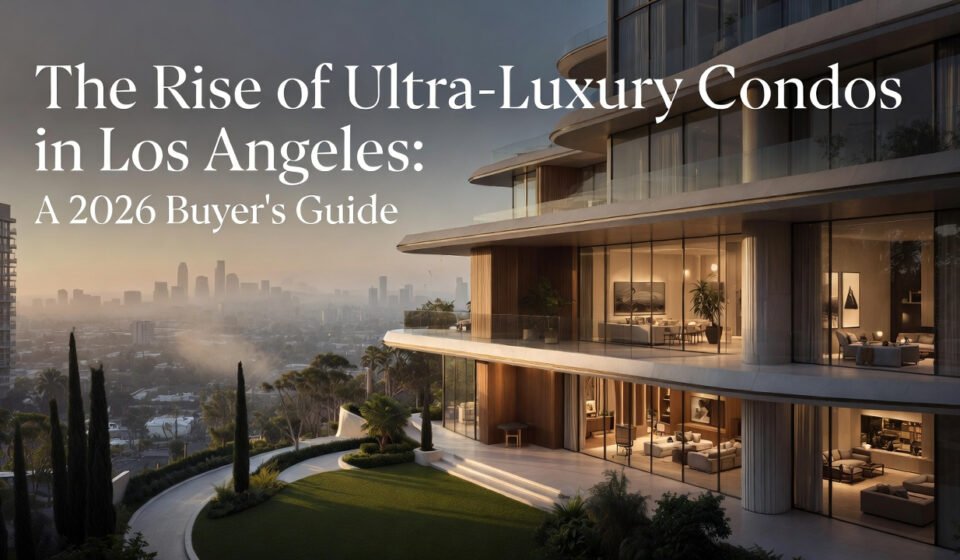
Something changed in the LA condo market around 2024, and by 2026, it had fully arrived. Ultra-luxury condos in Los Angeles aren’t just competing with single-family mansions anymore. They’re winning. Buyers who once wanted sprawling Bel Air estates are now choosing high-floor residences with hotel-grade services, rooftop pools, and addresses that do half the status work for them.
This isn’t a bubble story, or at least not entirely. It’s a structural shift in how wealthy buyers, especially global UHNWI (ultra-high-net-worth individuals), think about city living. In this guide, I’ll walk through what’s actually happening in the LA luxury condo market in 2026, which neighborhoods are worth watching, what you’ll realistically pay, and where the real risks hide.
Market Snapshot
| Metric | Estimated Value / Trend |
|---|---|
| Average Ultra-Luxury Condo Price (LA) | $3M–$12M+ depending on building and floor |
| Rental Yield (luxury tier) | 2.5%–4% annually (market-rate, unfurnished) |
| Demand Trend | Rising, particularly from international all-cash buyers |
| Price Growth (Year-over-Year) | Moderate appreciation, estimated 4%–7% in prime submarkets |
| Mansion Tax Threshold (ULA) | Applies to sales above $5M (5.5%) and $10M (5.25% additional) |
Note: These figures reflect qualitative market observations and available public data as of early 2026. Always verify current figures with a licensed California real estate professional.

Understanding Ultra-Luxury Condos in Los Angeles
Let’s be clear about what “ultra-luxury” actually means here, because the term gets used loosely. We’re not talking about a nice downtown condo with stainless appliances and a concierge desk. We’re talking about buildings where the amenities can feel more like a five-star resort than a residential block.
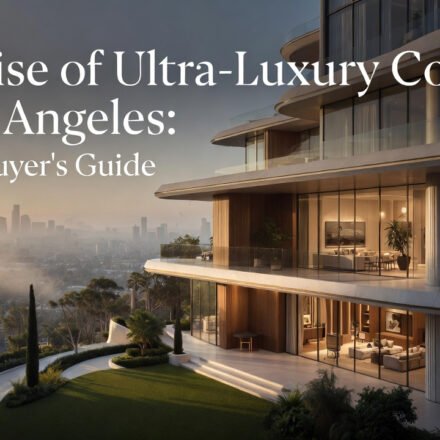
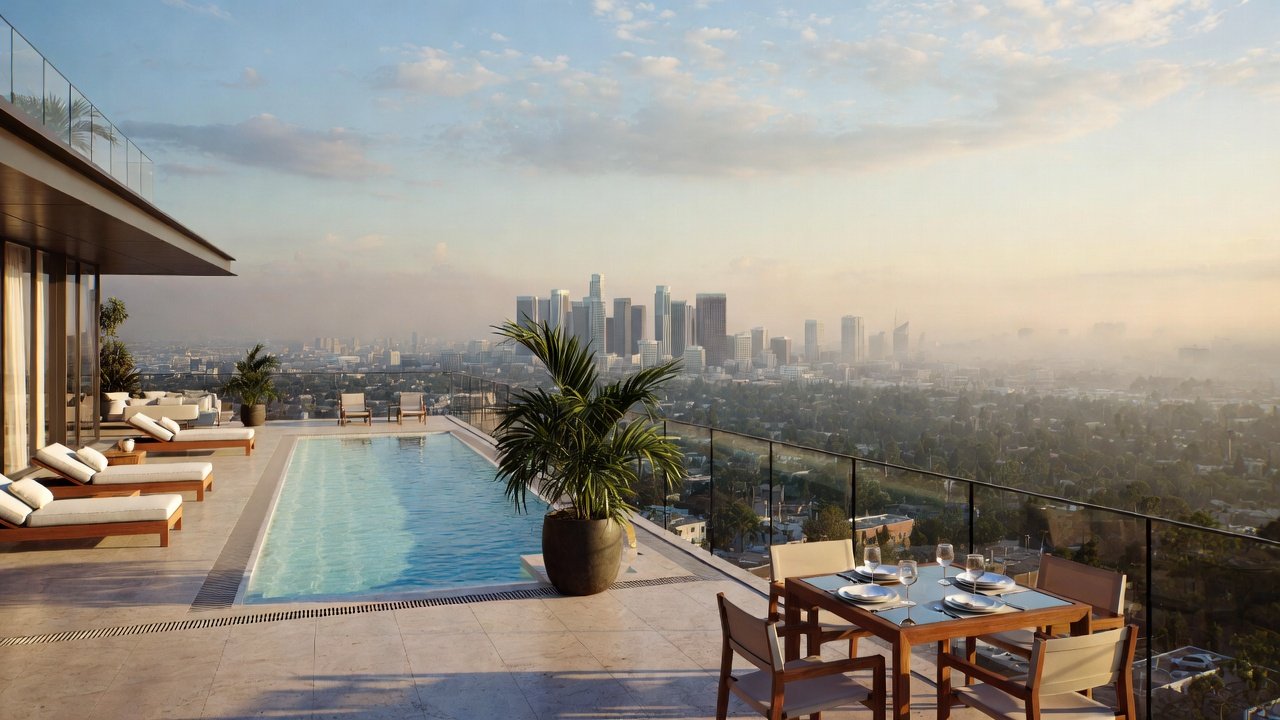
Think private wine cellars, car galleries where residents display their collection like museum pieces, medical-grade wellness suites with IV therapy on call, and facial recognition entry systems that don’t even require you to reach for a phone. The tech is invisible. That’s kind of the point.
Branded residences are the real headline in 2026. The Aman Residences in Beverly Hills is the clearest example of where the market is headed. When a hospitality brand with Aman’s reputation attaches its name to a building, it’s not just a marketing move. It fundamentally changes who buys there and at what price. Buyers aren’t just purchasing square footage. They’re buying into a managed lifestyle product.
This concept, “vertical estates in the sky” as some brokers have taken to calling them, reflects a genuine lifestyle shift. Post-pandemic preferences for walkable, service-heavy living didn’t disappear. For high-net-worth buyers, these hardened into requirements.
Market Trends and Demand in 2026
The demand side of this market is being pulled by a few overlapping forces right now.
First, international buyers are back. Cross-border capital from the Middle East, Southeast Asia, and parts of Europe is flowing into LA luxury real estate again, and condos are the preferred vehicle. They’re easier to manage remotely, there’s no garden to maintain, and the branded building handles everything. All-cash transactions dominate at the top end. Financing is almost a secondary conversation.
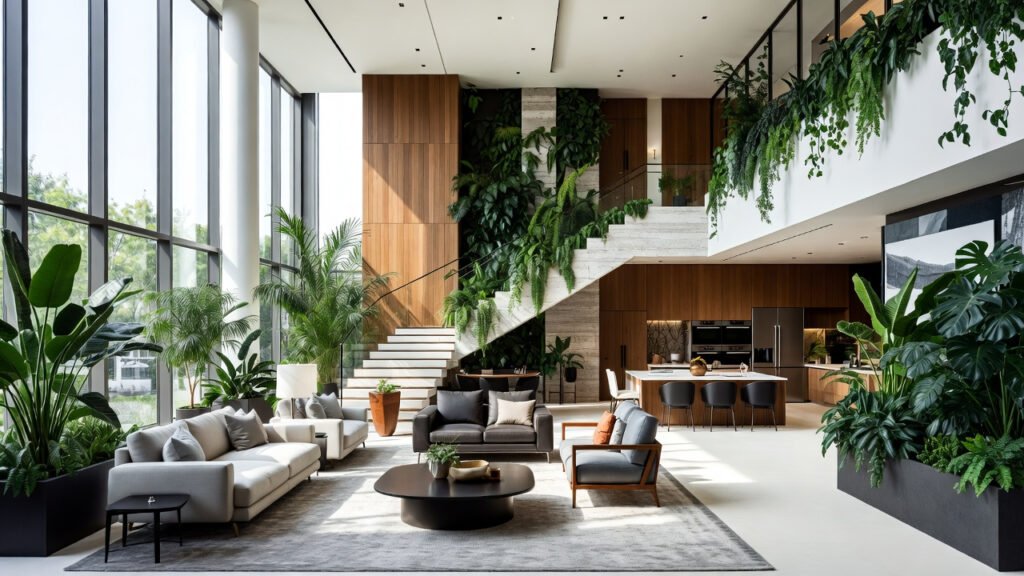
Second, domestic buyers are trading out of estates. I’m seeing this more than people might expect. Buyers who own a 10,000 sq ft home in Holmby Hills and spend four months a year in it are increasingly deciding to sell and consolidate into a 4,000 sq ft full-floor residence with full services. The maintenance burden disappears. So does the staffing headache.
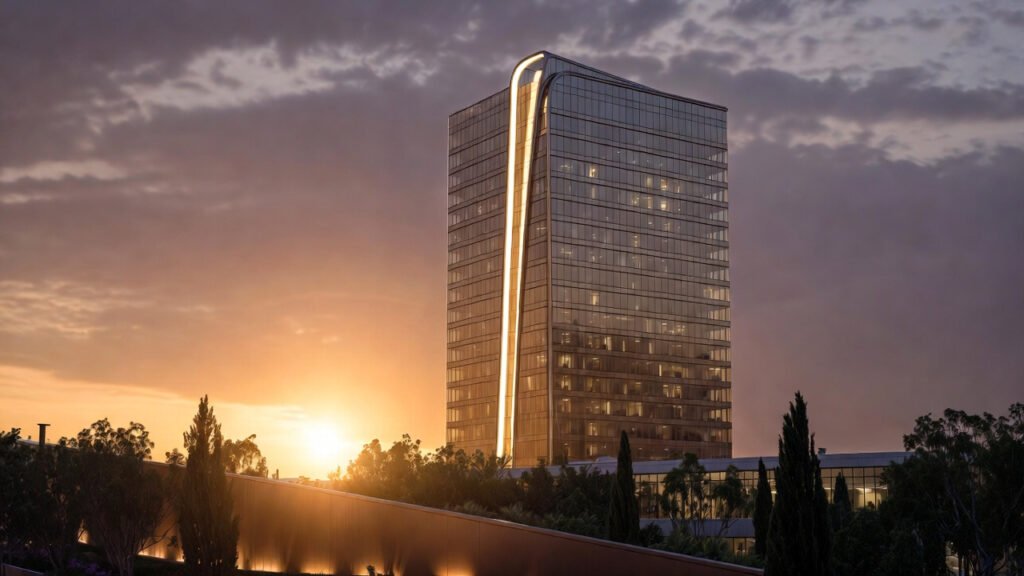
Third, the supply side is still constrained. Building in LA is hard. It’s slow, expensive, and politically complicated. That means a genuinely top-tier product is scarce. When a building like Metropolis or a new Century City tower delivers, the absorption tends to happen fast at the upper floors.
The Mansion Tax (Measure ULA) deserves its own mention. Since it went into effect in 2023, it’s added real friction to deals above $5 million. A $10M condo purchase now carries roughly $550,000 in ULA tax on top of standard transfer taxes. That’s nothing. Some buyers are structuring deals differently to manage this exposure, and it’s worth having a tax attorney involved well before you’re in contract.
Investment Opportunities and Where to Look
Century City
Century City is probably the most financially interesting submarket right now for condo investment. The area has transformed significantly over the past decade, with the Westfield Century City expansion and continued corporate office demand providing a stable economic base. High-rise residences here offer views of both the ocean and the Hollywood Hills. It’s a dual-market appeal that keeps demand broad.
Beverly Hills and the Platinum Triangle
Beverly Hills proper doesn’t have a huge condo inventory, which is part of what makes branded residences like Aman’s project so significant. The Platinum Triangle (Beverly Hills, Bel Air, Holmby Hills) is attracting buyers who want the address without the estate overhead. Supply here will stay limited for structural reasons. That scarcity can support values over time, though it also makes timing a purchase more difficult.
West Hollywood
West Hollywood has emerged as a surprisingly strong luxury condo market. It’s walkable by LA standards, the dining and nightlife access is unmatched, and the buyer profile skews younger and more design-aware. Investment condos in West Hollywood have attracted short-term rental interest, too, though local regulations on platforms like Airbnb have tightened significantly and need careful review before any STR strategy is built into a purchase.
Downtown LA (DTLA)
DTLA is a more complex story. There’s genuine lifestyle infrastructure now in neighborhoods like the Arts District and South Park, and some impressive luxury product has delivered. But absorption has been slower than developers hoped, and the overall urban environment still has challenges that some buyers won’t look past. Buyers focused on pure appreciation may find more consistent performance elsewhere.
Cost Breakdown and Financial Considerations
| Expense | Estimated Range |
|---|---|
| Property Purchase Price | $3M–$15M+ (ultra-luxury tier) |
| ULA Mansion Tax (if applicable) | 5.5% on $5M–$10M; additional 5.25% above $10M |
| Standard Transfer Tax | 0.11% (city) + 0.11% (county) |
| HOA Fees | $2,500–$8,000/month depending on building services |
| Property Tax (California) | ~1.1%–1.25% of assessed value annually |
| Maintenance / Reserves | Typically included in HOA, but verify reserve fund health |
| Expected Rental Yield | 2.5%–4% gross annually (luxury unfurnished) |
| Potential ROI Range | Highly variable; consult a licensed real estate advisor |
HOA fees at the ultra-luxury level are genuinely high. But they cover a lot. Valet parking, 24-hour concierge, security, building-wide maintenance, and sometimes spa and wellness access are all wrapped into that monthly number. Buyers who come from single-family homes sometimes underestimate how much this simplifies the cost structure of ownership.
Risks and Challenges
Buying at the ultra-luxury level doesn’t insulate you from risk. It changes the shape of it.
Liquidity is the biggest issue that most buyers don’t think through carefully enough. When you need to sell a $10M condo in LA, the pool of buyers is genuinely small. In a soft market, you’re not just competing on price. You’re waiting for the right buyer to arrive, and that can take time. Single-family estates often have more flexible buyer pools at slightly lower price points.
The Mansion Tax has also created a real psychological resistance at certain price thresholds. I’ve seen deals restructured specifically to come in just under $5M to avoid the ULA trigger. That compression around the $4.5M–$4.9M range is worth understanding if you’re buying in that zone, because it affects your exit options later.
Interest rate sensitivity matters even for mostly-cash buyers, because it affects the broader market that supports your eventual sale. If financing costs are high, the universe of buyers who can transact shrinks. LA luxury has held up well relative to other markets, but it’s not immune.
HOA health is underrated as a risk factor. Always request the reserve fund study and the last three years of meeting minutes before closing. Buildings with underfunded reserves or recurring maintenance disputes are real liabilities.
Expert Tips for Buyers and Investors
Work with a broker who specializes in this tier specifically. The luxury condo market in LA is small enough that relationships matter. The best inventory doesn’t always hit the open market, and a connected specialist will hear about it first.
Get your tax structure right before you write an offer. Whether you’re buying in an LLC, a trust, or personally has real implications for the Mansion Tax, estate planning, and future flexibility. Don’t figure this out at closing.
Understand the building’s ownership profile. A building where most units are investment purchases and frequently rented can feel different to live in than one dominated by primary residents. Neither is wrong, but you should know which environment you’re buying into.
If you’re considering a purchase partly for rental income, model the numbers conservatively. Gross yields of 3% sound decent until you factor in HOA, property tax, vacancy, and management fees. The net yield on ultra-luxury rentals can compress quickly.
Don’t buy the view without confirming what protects it. In LA, neighboring development rights can be complicated. Ask specifically about what can be built on adjacent parcels before you pay a premium for an unobstructed panorama.
Key Takeaways
- Ultra-luxury condos in Los Angeles are attracting serious global capital in 2026, with branded residences driving a new tier of demand.
- Century City, Beverly Hills, and West Hollywood are the strongest performing submarkets for high-end condo investment right now.
- The ULA Mansion Tax is a real cost factor above $5M and needs to be built into any financial model from day one.
- HOA fees are high but often wrap costs that single-family owners pay separately, so the comparison isn’t always what it first looks like.
- Liquidity risk is real at this price tier. Buy with a long time horizon or plan your exit strategy before you go in.
Frequently Asked Questions
What qualifies as an ultra-luxury condo in Los Angeles? Generally, condos are priced above $3 million with hotel-grade amenities, dedicated concierge services, and high-end finishes. Buildings like Aman Residences or full-floor Century City residences are examples. The category is defined by both price point and the level of service infrastructure in the building.
What is the ULA Mansion Tax, and how does it affect buyers? The ULA (United to House LA) Measure, known locally as the Mansion Tax, adds a 5.5% transfer tax on residential sales above $5 million and an additional 5.25% on the portion above $10 million. This is on top of standard transfer taxes and represents a significant closing cost that buyers must factor in.
Are branded residences worth the premium in LA? They can be, particularly if you value the management infrastructure and the brand association for eventual resale. Buyers report that branded buildings hold value well in downturns, partly because global buyers recognize and trust the brand. The premium over comparable non-brandedproductst varies but tends to be 20%–35%.
What neighborhoods have the strongest ultra-luxury condo markets in LA? Century City, Beverly Hills, and West Hollywood are consistently the strongest performers. DTLA haa s high-quality product but slower absorption. Brentwood and Santa Monica are smaller markets but have produced strong results for the right buildings.
Can foreign buyers purchase ultra-luxury condos in Los Angeles? Yes. There are no restrictions on foreign nationals buying residential property in California. However, FIRPTA (Foreign Investment in Real Property Tax Act) requirements apply to eventual sale, and buyers should work with a tax advisor familiar with cross-border real estate transactions.
What are typical HOA fees for LA ultra-luxury condos? HOA fees at the ultra-luxury level typically run $2,500–$8,000 per month, depending on the building, unit size, and service level. Full-service branded residences with 24-hour concierge, valet, and wellness amenities tend to sit at the higher end of that range.
Is the LA ultra-luxury condo market good for rental investment? It can offer rental income, but gross yields tend to be modest at 2.5%–4%. After HOA, property tax, and management fees, net yields compress significantly. Most buyers at this tier are focused on capital preservation and appreciation rather than cash flow.
What should I check before buying a luxury condo in LA? Beyond the standard inspection, review the building’s reserve fund study, recent HOA meeting minutes, any pending special assessments, and the building’s rental restriction policy. Also, to confirm the ULA tax exposure for your specific purchase price before you’re under contract.
Conclusion
The ultra-luxury condo market in Los Angeles in 2026 is genuinely interesting, and not just for the obvious reasons. There’s real structural demand here from a global buyer base that has decided managed, high-service vertical living is worth paying for. The branded residence concept has matured from a novelty into a genuine product category, and buildings like Aman’s Beverly Hills project are setting a new benchmark for what the market expects.
That said, this isn’t a simple “buy and profit” market. The ULA tax is a real cost. HOA fees are substantial. Liquidity at the top end requires patience. And like any concentrated real estate investment, the specific building matters as much as the neighborhood.
For buyers who’ve done the work, understand the costs, and have a realistic time horizon, LA’s ultra-luxury condo market can offer a combination of lifestyle and long-term value that’s genuinely hard to find elsewhere. But go in with open eyes, the right advisors, and a clear picture of what you’re actually buying into.
This content is for informational purposes only and should not be considered financial or investment advice. Always consult a licensed real estate professional ana d qualified financial advisor before making property investment decisions.
Internal Linking Suggestions
- “How the ULA Mansion Tax Affects LA Home Sales” — anchor text: Mansion Tax impact on luxury transactions
- “Best Neighborhoods to Buy a Luxury Home in Los Angeles” — anchor text: top LA neighborhoods for high-end buyers
- “Branded Residences vs Traditional Luxury Condos: What’s the Difference?” — anchor text: branded residences explained
- “Beverly Hills Real Estate Market Report 2026” — anchor text: Beverly Hills luxury real estate trends
- “Foreign Buyers Guide to US Real Estate Investment” — anchor text: international buyers purchasing US property
External Sources: