London’s Most Expensive Neighborhoods: A Guide to Elite Real Estate Investing in 2026

Prime Central London prices are 17% to 29.5% below their peak, creating real negotiating room for serious buyers. Mayfair, Knightsbridge, Belgravia, and Kensington & Chelsea remain the dominant addresses, with top street averages running from £7M to over £12M. Rental yields sit between 2.5% and 4%, making this a capital preservation play rather than a cash-flow strategy. And 96% of deals above £10M never appear on public portals, so access matters as much as budget.
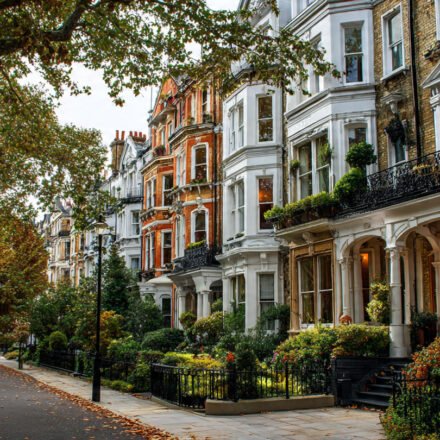
Walk down Ebury Square on a quiet Tuesday morning, and you’ll understand why Belgravia still draws the world’s wealthiest buyers despite price tags most people can’t picture. The stucco-fronted townhouses haven’t changed much in 150 years. The demand hasn’t either. What has changed is the buying opportunity. Prime Central London came out of 2025 with prices well below their peak, more inventory than usual, and serious sellers willing to negotiate. That’s a combination you don’t see often in these postcodes.
This guide breaks down London’s most expensive neighborhoods, what prices actually look like right now, where the real investment opportunities are, and what risks buyers should understand before committing serious capital to PCL in 2026.
Market Snapshot
| Metric | Estimated Value |
|---|---|
| Average asking price (top PCL streets) | £7M – £12M+ |
| Rental yield range | 2.5% – 4% |
| Demand trend | Recovering, buyer-favorable |
| Price vs. peak | Down 17% – 29.5% by area |
| 5-year rent growth projection | ~6.1% cumulative |
Why Millions Have to Sell Their Homes in London Before 2026

What Makes These Neighborhoods Different
London’s most expensive neighborhoods aren’t just expensive because of location. They’re expensive because the supply of quality stock is genuinely limited. You can’t build new stucco townhouses in Belgravia. You can’t manufacture another Mayfair. That physical scarcity is what keeps institutional and private wealth coming back to these postcodes even during down cycles.
The “golden postcodes,” as agents call them, are SW1X for Knightsbridge, W1K for Mayfair, SW1W for Belgravia, and W8/SW7 for Kensington and South Kensington. Properties here are widely treated as trophy assets. Buyers aren’t purely chasing rental income. They’re acquiring assets that hold value across economic cycles, offer lifestyle utility, and often serve as a pied-à-terre for international buyers splitting time between cities.
It’s also worth noting that the buyer pool isn’t just domestic. Expats from the US and the Middle East remain active in PCL. Despite stamp duty increases and non-dom tax changes over 2024 and 2025, foreign demand hasn’t dried up. It’s become more selective.
Market Trends and What’s Driving Them
I’m seeing a consistent pattern across PCL in early 2026. Sales instructions rose between 2% and 12.5% after the autumn 2025 budget, depending on the street and property type. More stock hitting the market without a corresponding surge in buyers has created genuine negotiating room. That’s unusual for these postcodes.
Belgravia prices are sitting 29.5% below their peak. Chelsea is roughly 20.5% down. Even Mayfair, which tends to be the most resilient, is seeing average discounts of around 17.1% on some properties. For buyers with real capital who’ve been waiting on the sidelines, this is exactly the kind of window they’ve been hoping for.
Rents are moving in the opposite direction. Rental values across prime London have grown in the low single digits annually and now sit around 30% above pre-pandemic levels. Projected cumulative growth over the next five years comes in around 6.1%. This isn’t a yield play. But for UHNW investors, it doesn’t need to be. The capital preservation and portfolio diversification case is strong enough on its own.
One thing that doesn’t get enough attention is how dominant off-market transactions are at the top of this market. Around 96% of deals above £10M happen privately, away from Rightmove and Zoopla. If you’re trying to access the best stock without a well-connected agent, you’re essentially locked out of most of it.
Neighborhood-by-Neighborhood Breakdown
Mayfair (W1K)
Mayfair is probably the most globally recognized of London’s prime addresses, and it commands prices that reflect that. Resale apartments run between £3,500 and £7,000 per square foot. New builds in the best developments push past £10,000 per square foot. A typical one-bedroom flat costs around £1.49M, and a three-bedroom sits closer to £4.49M.
New development in Mayfair is extremely limited. When quality stock comes to market, it attracts competitive interest even in a softer,r broader environment. This is also why yield-attractive developments in nearby regeneration areas are worth considering as a complement to a Mayfair-anchored portfolio.
Knightsbridge (SW1X)
Knightsbridge is consistently one of the priciest addresses in the world, notjust int London. Streets in this postcode average around £8.26M. Yields come in around 3% to 3.5%, which is actually on the higher side for PCL. The proximity to Harrods, Hyde Park, and the cultural cluster of South Kensington museums makes this area popular for buyers who want a pied-à-terre that works as an investment rather than just sitting empty. International demand here is robust, particularly from Gulf and Southeast Asian buyers.
Belgravia (SW1W)
Belgravia offers something the other neighborhoods don’t quite match, which is architectural uniformity at scale. The stucco-fronted townhouses are simply hard to find anywhere else. Ebury Square, one of the neighborhood’s most sought-after addresses, is averaging around £8.52M per property. With prices still 29.5% off peak, there’s a real case that this area represents one of the stronger value opportunities in PCL right now for long-term buyers. Foreign demand has remained steady throughout the recent downturn.
Kensington and Chelsea (W8 / SW7)
Kensington and Chelsea covers a broader range of property types and price points than the other PCL neighborhoods. Detached homes were averaging around £4.23M in December 2025. Flats sit at a borough-wide average closer to £934K, though anything in the truly elite category starts at £2M and goes well above that. Holland Villas Road was averaging £7.32M per listing in early 2026. Chelsea has come down roughly 20.5% from peak, making this a realistic entry point for buyers who want a London base without committing to Belgravia-level prices.
Financial Breakdown: What to Budget For
| Expense | Estimated Range |
|---|---|
| Property purchase price (PCL) | £1.5M – £20M+ |
| Stamp Duty Land Tax | 5% – 12% (higher for non-UK residents and additional properties) |
| Legal and conveyancing fees | £5,000 – £25,000+ |
| Annual service charges (luxury buildings) | £15,000 – £80,000+ |
| Maintenance and management costs | 1% – 2% of property value annually |
| Rental yield (if letting) | 2.5% – 4% |
| Expected 5-year capital growth | 1% – 5% per year (market-dependent) |
These are broad ranges. Your actual costs depend on the property type, leasehold versus freehold structure, and your residency status. Non-UK residents face a 2% SDLT surcharge on top of standard rates. That’s worth factoring in early before you fall in love with a specific property.
Risks Worth Taking Seriously
The biggest risk in PCL right now isn’t the properties themselves. It’s paying too much in a market where prices haven’t found a definitive floor yet. I’d be cautious about assuming the 17% to 29% discounts from peak represent the absolute bottom. Interest rate decisions in both the UK and the US will influence sentiment throughout 2026, and global economic uncertainty can push cautious buyers to the sidelines faster than expected.
Leasehold properties, which are extremely common in London’s luxury flat market, carry ongoing risks around service charges, major works assessments, and lease extension costs. A flat with 75 years left on the lease looks attractive until you factor in what a lease extension will actually cost. Always check the lease length before making an offer.
Regulatory changes around rental licensing, short-term lets, and non-dom tax treatment have also made the investment landscape more complicated than it was five years ago. Get specialist tax advice before buying as a non-UK resident or through a corporate structure.
What I’d Suggest for Buyers and Investors
The most important thing is knowing what you’re buying for. If it’s pure yield, PCL probably isn’t the right choice. A regeneration hotspot like Nine Elms or Battersea Power Station will give you better income potential with more growth upside tied to infrastructure investment.
If it’s capital preservation and portfolio diversification, the core golden postcodes make sense. Look for off-market opportunities through established agents who have genuine relationships in these buildings. The best deals rarely appear on property portals.
Don’t overlook the leasehold question. Freehold or share-of-freehold properties in PCL carry a meaningful premium for good reason. The ongoing costs of managing a short lease in a luxury building can significantly affect your effective return.
For buyers from the US or the Middle East, currency timing matters. Sterling has moved significantly against the dollar and dirham at various points in recent years. The current exchange rate environment may offer meaningful advantages for dollar-denominated buyers.
Think about the amenity offering in any new-build development you’re considering. The best-performing luxury developments right now are the ones with concierge services, private gyms, and curated lifestyle amenities. That’s not just marketing. It’s what drives rental demand and resale values in this market.
Key Takeaways
Prime Central London prices are 17% to 29.5% below peak in 2026, creating a real window for patient buyers. Mayfair, Knightsbridge, Belgravia, and Kensington & Chelsea each have distinct price points and buyer profiles worth understanding before you commit. Rental yields of 2.5% to 4% make PCL better suited to capital preservation than high-yield income strategies. Off-market transactions dominate above £10M, so the best deals require agent relationships, not portal searches. And non-UK buyers face higher SDLT rates along with more complex tax considerations that require specialist advice.
Frequently Asked Questions
What are the most expensive neighborhoods in London right now? The most expensive areas are Knightsbridge, Mayfair, Belgravia, and Kensington & Chelsea. Average asking prices on top streets range from £7M to over £12M. Knightsbridge and Belgravia streets are consistently among the highest in the city, with some addresses averaging above £8M per property in early 2026.
Is now a good time to buy in Prime Central London? It can be, depending on your goals. Prices are 17% to 29.5% below their peak, and there’s more inventory than usual, which creates room to negotiate. However, prices haven’t definitively bottomed out,t and the market still carries risks tied to interest rates and global economic conditions. Long-term buyers are generally better positioned than short-term speculators.
What rental yield can I expect from a luxury London property? Rental yields in Prime Central London typically run between 2.5% and 4%. This is relatively low compared to mainstream UK markets. PCL investment is generally driven by capital preservation and long-term appreciation rather than immediate income returns, which is important to understand before buying.
What is a “golden postcode” in London? The term refers to the most sought-after postal districts in Prime Central London, specifically SW1X for Knightsbridge, W1K for Mayfair, SW1W for Belgravia, and W8/SW7 for Kensington. Properties in these postcodes tend to hold their value better through market downturns than other London addresses and carry significant weight with global buyers.
How do off-market property deals work in London? Off-market deals are transactions that never appear on public portals. The seller’s agent approaches qualified buyers directly within their existing network. At the £10M and above level, around 96% of transactions happen this way. Accessing this stock requires working with well-connected agents who have long-standing relationships with sellers and developers in PCL.
What extra costs do non-UK buyers face when purchasing in London? Non-UK residents pay a 2% SDLT surcharge on top of standard stamp duty rates, which already reach up to 12% for higher-value properties. Legal fees, agent fees, and ongoing service charges in luxury buildings add significantly to the total cost of ownership. Specialist tax advice is essential before committing.
What are regeneration hotspo,t s and are they worth investing in? Regeneration hotspots are areas undergoing significant infrastructure investment, like Nine Elms and Battersea Power Station. These areas tend to offer better rental yields and stronger short-to-medium term capital growth than core PCL postcodes, though they carry more risk. They’re worth considering as a complement to a PCL-focused portfolio rather than a direct substitute.
What is a pied-à-terre and why do London buyers buy them? A pied-à-terre is a small secondary property used as a city base rather than a primary home. Many buyers in Knightsbridge and Mayfair are international residents splitting time between cities. A pied-à-terre gives them a permanent London address with full ownership benefits, chosen for lifestyle convenience and long-term investment value rather than rental income.
Conclusion
London’s prime real estate market in 2026 is complicated, and that’s actually what makes it interesting. Prices are off their highs, sellers are negotiating, and there’s more choice than buyers have seen in years in these postcodes. For long-term investors who can think in five to ten-year cycles and don’t need immediate yield, current conditions are as favorable as they’ve been in some time.
That said, it isn’t a market for impulsive decisions. Leasehold structures, tax changes affecting international buyers, and ongoing uncertainty around the broader UK economic picture all require proper professional advice before you commit. Work with a specialist solicitor, a tax adviser who understands non-dom implications, and an agent who actually has relationships in these buildings rather than just a Rightmove subscription.
The fundamentals of PCL haven’t changed. Genuine scarcity, sustained global demand, and an address that carries weight in every major wealth market. What’s changed is the price. For the right buyer, that’s the opportunity.
Suggested Internal Links
This content is for informational purposes only and should not be considered financial or investment advice.