
Texas real estate in 2026 isn’t just about Austin, Dallas, Houston, and San Antonio anymore. Suburban corridors and mid-size cities are pulling serious investor attention. Price normalization after the pandemic surge is creating value plays that weren’t available two years ago. This article breaks down where real opportunity is sitting right now, and why some of the quieter Texas markets might be the smarter bet.
Introduction
Texas didn’t slow down. Even after the frantic 2021–2023 run-up, the state kept absorbing people, companies, and capital faster than almost anywhere else in the country. But something shifted heading into 2025. The big four, Austin, Dallas-Fort Worth, Houston, and San Antonio, started showing the strain of that growth. Prices got stretched. Inventory built up in Austin, especially. And investors started looking harder at what’s beyond those familiar city limits.
The emerging real estate markets in Texas 2026 story is really a story about that search. Corporate relocations didn’t stop at Plano and Frisco. Infrastructure spending pushed further out. And a new wave of in-migration from California, Illinois, and New York is landing in places most people haven’t mapped yet. This piece walks through where that activity is concentrating, what it means for buyers and investors, and how to think about risk in markets that are still finding their price levels.
Market Snapshot
| Metric | Overview |
|---|---|
| Statewide Median Home Price | Trending toward stabilization post-correction |
| Average Rental Yield (secondary markets) | Estimated 5%–8% depending on submarket |
| Demand Trend | Strong in suburban/exurban corridors, softening in Austin core |
| Population Growth (YoY) | Texas consistently among top 3 states nationally |
| Price Growth Forecast 2026 | Modest appreciation in growth corridors, flat in saturated cores |
Note: These are trend-based estimates. Always verify current data with local agents and platforms like Zillow or the National Association of Realtors before making investment decisions.
Top 5 Texas Cities About to Boom in 2026!

Understanding What’s Actually Driving Growth in Texas Right Now
The short answer is jobs and people. Texas doesn’t have a state income tax. It’s got a reputation for business-friendly regulation and landlord-friendly legislation that genuinely matters if you’re holding rental property. And after years of corporate relocations, the “Silicon Prairie” label that tech journalists slapped on the DFW corridor turned into something real.
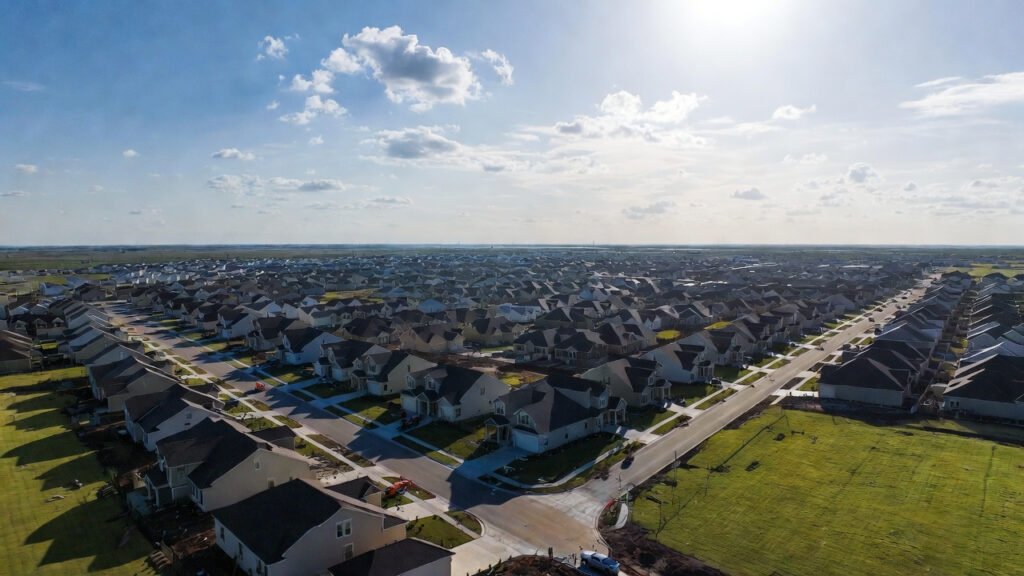
But the longer answer involves understanding how that growth has now spread. Companies that couldn’t afford the rents around Plano and Frisco started setting up operations in smaller metros. Georgetown, just north of Austin, added residents at a rate that made it one of the fastest-growing cities in the US for multiple years running. New Braunfels, between Austin and San Antonio, pulled in families priced out of both. Kyle and Buda turned into actual towns, not just dots on a map.
Infrastructure is doing a lot of the heavy lifting here. The Texas Department of Transportation has been running serious highway expansions throughout Central Texas and the I-35 corridor. New airport capacity around San Antonio and the broader DFW region has made previously inconvenient locations genuinely accessible. When commute times drop, prices follow.
Build-to-rent communities are another signal worth watching. Institutional investors don’t pour capital into BTR projects without conviction in rental demand. The fact that these developments are landing in places like Denton, Conroe, and Seguin tells you something real about where professional money thinks the tenant population is heading.
Market Trends and Demand Analysis
The Austin housing market correction 2026 narrative gets a lot of press, and it’s not wrong exactly, but it’s incomplete. Yes, Austin’s median home prices pulled back from their 2022 peaks. Inventory rose. Some neighborhoods that felt unstoppable started sitting longer. But that correction created a floor, and now there’s actually a more interesting conversation happening about what Austin’s surrounding suburbs look like on the other side of that reset.
I’m seeing that the real price action in 2026 is happening in a band of cities that feed Austin and San Antonio without being either of them. Georgetown, Cedar Park, and Pflugerville are on the north side. Lockhart and San Marcos to the south. These aren’t speculative bets. They’ve got population, employers, and school districts that families actually want.
In the Houston orbit, things look different. Houston rental demand has stayed stickier than many expected. The energy sector isn’t gone. The Texas Medical Center is still one of the largest medical complexes in the world, and healthcare jobs don’t disappear. Conroe to the north and Sugar Land to the southwest are both picking up overflow demand from Houston proper. Rental yields in those submarkets can sit comfortably above what you’d find in saturated Dallas zip codes.
San Antonio has been the quiet value play for years, and that hasn’t really changed. The military presence creates a stable rental base. Tourism is a genuine economic driver, not just a footnote. And prices there never reached the dizzy heights that Austin did, which means the correction was gentler and the entry points today are still relatively accessible. San Antonio value play real estate is a phrase I’d use without apology.
Dallas-Fort Worth suburban growth trends remain strong,g but they’ve matured. Frisco and McKinney are no longer emerging; they’re established. The attention has shifted to Prosper, Celina, and Anna further north, and to the eastern suburbs around Rockwall and Forney, where land is cheaper,r and development is still in early stages.
Investment Opportunities
High-Growth Corridors Worth Watching
Georgetown and Hutto, north of Austin. Conroe and Montgomery,y north of Houston. New Braunfels and Seguiare n in the San Antonio orbit. Celina and Prosper are above the DFW line. These aren’t random picks. They share a pattern of strong in-migration, recent or planned infrastructure investment, and price points that still allow positive cash flow on a rental property with a reasonable down payment.
Rockwall County, in particular,r is worth a closer look. It sits east of Dallas, on Lake Ray Hubbard, and it’s pulled in a different demographic than most Texas suburbs. The lake lifestyle angle brings buyers who want space and water access without the Lakeway or Marble Falls price tag. And it’s close enough to downtown Dallas that remote workers with occasional office days find it genuinely livable.
Rental Property Opportunities
Secondary market yields in Texas tend to run higher than in the major cores, simply because purchase prices are lower while rents have followed population northward. A single-family rental in Conroe or Seguin can offer yields that a comparable Austin property hasn’t touched since 2019.
Short-term rental is worth mentioning, though with a caveat. Cities with active STR ordinances have tightened rules. San Antonio and Austin both have restrictions that can affect nightly rental income. Smaller markets are generally more permissive right now, but regulations can change. Anyone buying specifically for Airbnb income needs to check current local ordinances, not year-old advice.
Long-Term Appreciation Potential
The in-migration patterns from high-tax states to Texas exurbs haven’t reversed. California, Illinois, and New York continue to export population, and a meaningful chunk of that lands in Texas. That’s a structural tailwind that doesn’t disappear in a single interest rate cycle.
Infrastructure-led appreciation is the most reliable long-term bet in these markets. When a major highway extension gets funded and built, the towns it connects start repricing. Watching TxDOT project maps and understanding which corridors are slated for expansion in the next 3–5 years gives investors a genuine head start over casual buyers.
Cost Breakdown and Financial Considerations
| Expense | Estimated Range |
|---|---|
| Property Purchase Price (suburban TX) | $250,000–$450,000 |
| Property Taxes | Roughly 1.8%–2.5% of assessed value annually |
| Closing Costs | 2%–4% of purchase price |
| Maintenance (annual estimate) | 1%–2% of property value |
| Expected Rental Yield | 5%–8% in emerging submarkets |
| Potential ROI Range | Varies significantly by location and financing |
Texas property taxes are high. That’s the number one thing out-of-state investors get surprised by. Someone coming from California or the UK, where council tax or property rates look very different, can underestimate the annual tax burden significantly. In some counties,s that rate sits above 2.5%, which can eat into cash flow on a lower-priced property faster than you’d expect.
That said, no state income tax offsets some of that burden for people who actually live and work in Texas. For investors who don’t, the math is purely on the property tax side, so running the numbers carefully before committing is not optional.
Financing in 2026 still reflects the higher-rate environment, though rates have pulled back from their 2023 peaks. Creative structures like assumable mortgages, where available, or DSCR loans for investment properties are worth exploring if conventional financing feels tight.
Risks and Challenges
Price normalization soundscleare,n but it cuts in both directions. Markets that are at corrected levels can stabilize and recover. They can also correct further. Parts of Austin that saw speculative buying in 2021 and 2022 are still working through that excess. Anyone trying to time a bottom is guessing, and the ones who bought at peak prices are sitting on losses that could take years to recover.
Interest rate sensitivity matters more in high-price markets. A $400,000 home at a 7% rate carries meaningfully different monthly costs than the same home at 4%. That affects both investor cash flow and the pool of potential buyers if you’re planning to sell in 3–5 years.
Texas insurance costs have risen sharply. Hail, flooding, and extreme heat events have pushed homeowners’ insurance premiums up across the state. Some coastal and flood-prone areas near Houston are genuinely difficult to insure at a reasonable cost. Anyone buying in Harris County or near the Gulf Coast areas should get insurance quotes before making an offer, not after.
Regulatory changes around short-term rentals and tenant protections can shift the investment case on a specific property. Texas is generally a landlord-friendly legislative territory, and that’s unlikely to reverse at the state level, but individual cities have their own rules, and those do change.
Oversupply is a real risk in markets where builders went hard. Certain San Antonio submarkets and some outer DFW suburbs saw heavy new construction that’s now competing with resale inventory. That competition caps appreciation in the short term.
Expert Tips for Buyers and Investors
Don’t skip the property tax research. Look up the specific county and city tax rates before you model any numbers. Two houses with the same price in different Texas counties can have wildly different annual tax bills.
Look at permit data. Counties publish new construction permits,s and they’re actually useful. High permit volume relative to population growth signals incoming supply competition. Low permit volume in a growing area signals potential for price appreciation.
Spend time with the commute reality. A lot of Texas exurban growth depends on people tolerating long drives or working remotely. If hybrid policies tighten at major employers and people are back in the office 4–5 days a week, some of the furthest-out markets could soften. Think about where the jobs actually are when buying 45 miles out from a city center.
For UK investors specifically, the Texas market has some structural appeal because of the landlord-friendly legislative environment and the relative transparency of US property records. But currency risk, remote property management costs, and the US tax treatment of foreign property owners all need professional advice. Don’t buy Texas real estate from overseas without a US-based CPA who knows international investor situations.
Build a local team before you buy. A good buyer’s agent, a local property manager if you’re not living there, a CPA who knows Texas real estate, and a reliable contractor contact. Investors who try to manage everything remotely without local relationships consistently get caught out.
Key Takeaways
Texas’s growth story in 2026 has shifted from the big four cores to the secondary markets and exurban corridors that surround them. Georgetown, Conroe, New Braunfels, Celina, and Rockwall are among the markets seeing genuine demand-driven momentum. San Antonio still offers some of the most accessible entry points for value-oriented investors. Property taxes are high, and insurance costs have risen; both need to be modeled carefully. Infrastructure investment is one of the clearest leading indicators for appreciation in emerging Texas submarkets.
FAQ
What are the best emerging real estate markets in Texas for 2026? Georgetown, Conroe, New Braunfels, Celina, and Rockwall are among the markets showing strong demand fundamentals heading into 2026. Each benefits from population growth, infrastructure investment, or proximity to major employment centers. Entry prices remain more accessible than in core metros like Austin or Dallas proper.
Is Austin’s housing market still correcting in 2026? Austin has gone through a meaningful price correction from its 2022 peak. Inventory rose, and days on market increased. In 2026, most analysts see Austin approaching stabilization rather than continued sharp declines, though specific neighborhoods vary considerably. Surrounding suburbs like Cedar Park and Pflugerville have held up better.
What rental yields can investors expect in Texas secondary markets? Rental yields in Texas secondary markets like Conroe, Seguin, and Hutto can potentially reach 5%–8% depending on property type, purchase price, and local rental rates. These figures aren’t guaranteed and depend heavily on local market conditions, financing costs, and property management expenses.
How do Texas property taxes affect real estate investment returns? Texas has no state income tax but relatively high property taxes, often running between 1.8% and 2.5% of assessed value annually. This can significantly affect cash flow on rental properties, especially at lower price points. Investors should factor in county-specific rates before modeling any deal.
Are build-to-rent communities a good investment in Texas? Build-to-rent communities are growing across Texas secondary markets because institutional investors see strong long-term rental demand. For individual investors, buying near BTR developments can signal strong rental fundamentals in an area, but direct BTR investment typically requires institutional access or specialized funds.
What risks should I know about before investing in Texas real estate? Key risks include high and rising property insurance costs, property tax burdens, potential oversupply in heavily built-out suburbs, interest rate sensitivity, and regulatory changes around short-term rentals. Markets furthest from employment centers are also exposed if remote work trends reverse.
Is San Antonio a good place to invest in 2026? San Antonio has consistently offered value relative to Austin and Dallas, and that remains true in 2026. Military and healthcare employment provide a stable rental base. Price levels never reached the speculative heights of Austin, which means the correction was mild,r and entry points today are still reasonable.
What’s driving in-migration to Texas exurbs? In-migration patterns from high-tax states like California, Illinois, and New York continue to feed Texas population growth. People are moving to Texas exurbs for lower housing costs, more space, no state income tax, and a general cost-of-living advantage. This structural flow has supported demand in outer suburbs even as the broader market has cooled.
Conclusion
Texas real estate in 2026 isn’t a simple bullish or bearish story. The easy money of the pandemic surge is gone. But the structural case for Texas, jobs, population growth, landlord-friendly legislation, and infrastructure investment, remains intact. What’s changed is where the opportunity sits.
The smart money in 2026 is paying close attention to the corridors and mid-size cities that absorbed the overflow from the big four. Georgetown, New Braunfels, Conroe, Celina. Places with real populations, real employers, and real infrastructure investment behind them. Not speculation. Growth.
For UK investors looking at Texas as a transatlantic bet on the American Sun Belt story, the fundamentals are still compelling, but the execution details matter more now than they did when everything was rising. Currency, tax structure, and management costs. All of it needs proper professional guidance.
The Texas housing market has matured past its frontier phase. That’s actually good news for disciplined investors who do their research, build local relationships, and buy with realistic return expectations rather than 2021 fever dreams.
This content is for informational purposes only and should not be considered financial or investment advice.
Internal Linking Suggestions