
Quick Summary
- Manhattan’s ultra-luxury market continues to attract global buyers in 2026, with median sale prices reaching $1.4 million city-wide and trophy properties routinely exceeding $50 million.
- Billionaires’ Row — centered along 57th Street near Central Park — remains the most prestigious residential corridor in the world, home to the tallest residential towers on earth.
- Buyers should weigh significant financial, regulatory, and vacancy-related risks before entering the ultra-luxury segment.
- Several full-floor and penthouse residences remain available across iconic buildings like Central Park Tower, 432 Park Avenue, and Steinway Tower.
Introduction
Manhattan has always played by its own rules. While most real estate markets respond to interest rate cycles and inventory swings, New York’s ultra-luxury tier seems to operate on a different frequency entirely — one tuned to the preferences of billionaires, sovereign wealth funds, and global dynasties. In 2026, that frequency is running louder than it has in years.
The median sale price in Manhattan reached $1.4 million in January 2026, a 14.8% increase year-over-year, a figure that includes the full range from co-ops in upper Manhattan to full-floor residences overlooking Central Park. At the very top, the numbers are stratospheric. The ultra-prime segment in 2026 typically includes properties priced above $50 million, with trophy estates crossing the $100 million mark.
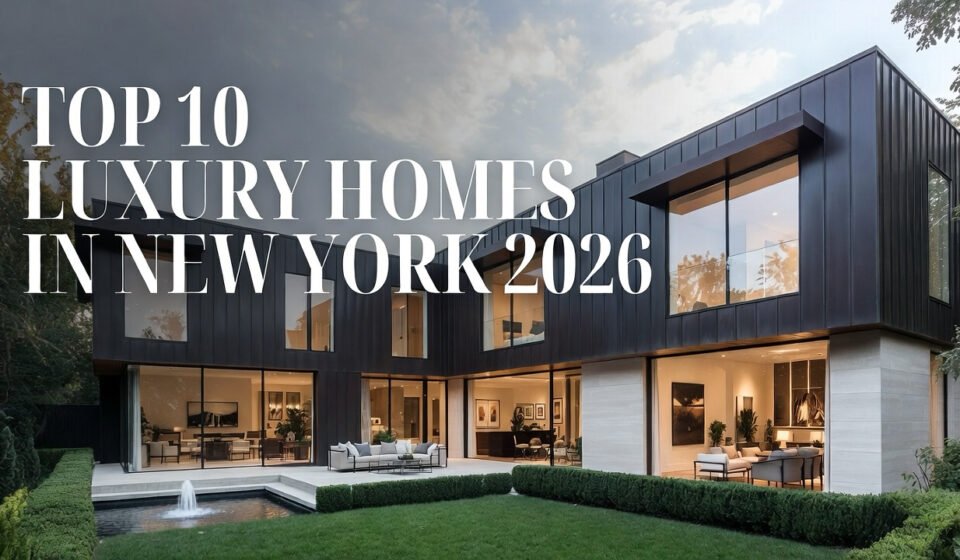
This guide walks through ten of the most notable luxury homes available in New York in 2026 — what they offer, what they cost, and what buyers need to understand before entering one of the world’s most competitive real estate markets.
Market Snapshot
| Metric | 2026 Data / Trend |
|---|---|
| Manhattan Median Sale Price | $1.4 million (Jan 2026) |
| Year-over-Year Price Growth | +14.8% (overall market) |
| Condo Price Growth (YoY) | +20.8% |
| Ultra-Prime Entry Point | $50 million+ |
| Average Billionaires’ Row Unit Price | ~$30 million |
| Luxury Doorman Rental Median | $5,295/month (all-time high) |
Sources: Robert DeFalco Realty / Miller Samuel, Douglas Elliman market data, 2026.

Understanding New York’s Ultra-Luxury Real Estate Market
The phrase “luxury real estate” gets applied loosely across most cities. In Manhattan, it means something specific — and extreme.
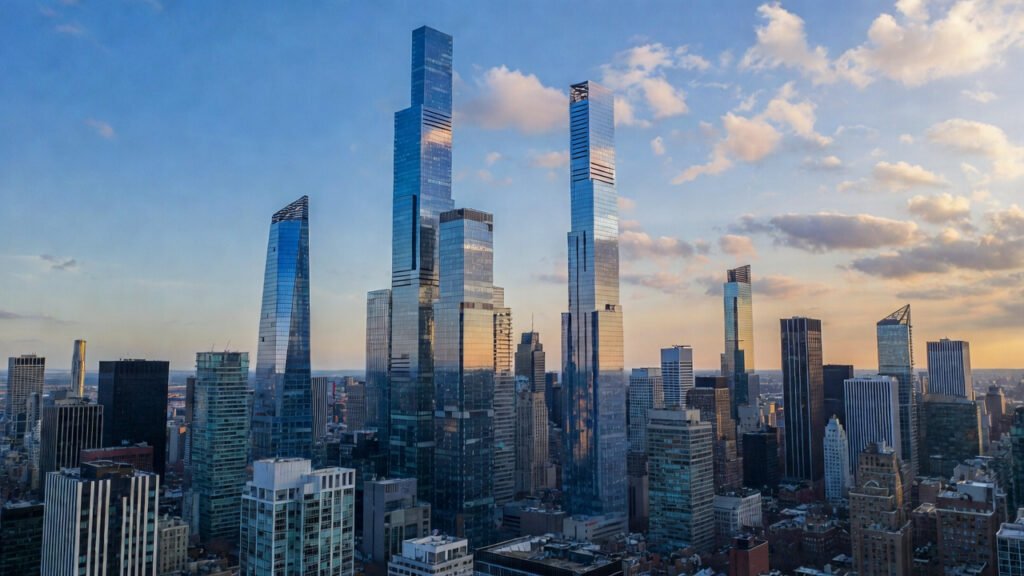
Billionaires’ Row is a group of ultra-luxury residential skyscrapers near the southern end of Central Park in Midtown Manhattan. Several of these buildings are in the supertall category — taller than 1,000 feet — and as of 2024 include the world’s three tallest residential buildings. This cluster of pencil towers along and near 57th Street has redefined what residential architecture is capable of, both structurally and commercially.
What separates these properties from conventional luxury condos is architectural distinction, extreme scarcity, and unobstructed Central Park views. Price per square foot in these towers ranges from $2,000 to over $10,000. For buyers in this market, the purchase is rarely about needing a home. It is about acquiring an asset — one that functions, as analysts frequently note, more like a safety deposit box than a residence.
For billionaires around the world, these luxury real estate units function less as homes and more as real estate “safety deposit boxes,” with the strategy seemingly focusing on capital preservation rather than profit generation. That context matters enormously for anyone considering entry into this tier.
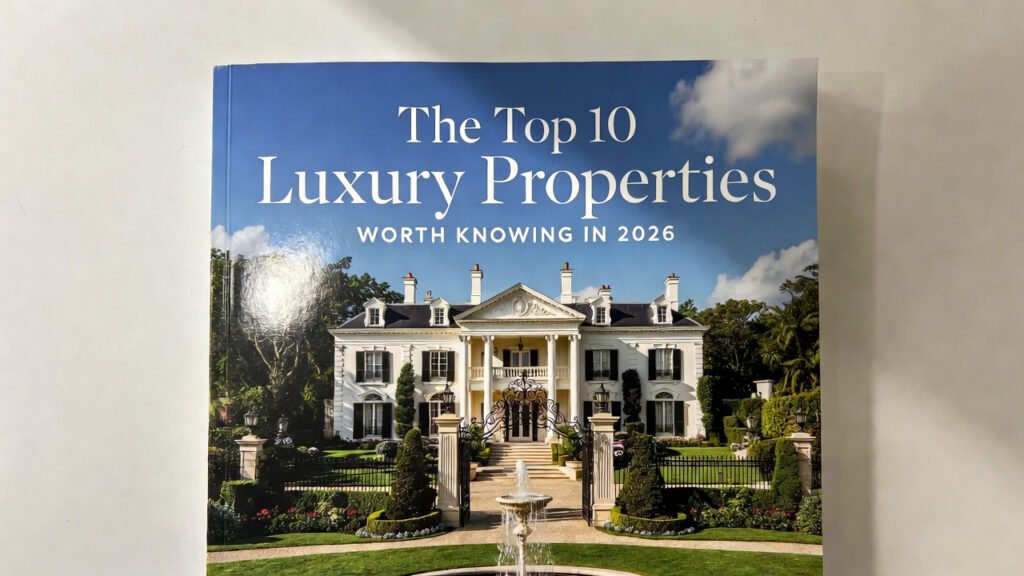
The Top 10 Luxury Properties Worth Knowing in 2026
1. 111 West 57th Street (Steinway Tower) — Penthouse Quadplex, $110 Million
This is currently the most expensive home listed on the New York City market. Perched over 1,000 feet in the air, this four-story quadplex is the highest of its kind in the United States, and at $110 million, it sits at the top of Manhattan’s active listings.
The 11,480-square-foot residence spans the 80th to 83rd floors of what is officially the world’s most slender skyscraper, with a startling 24:1 height-to-width ratio. The unit offers five bedrooms, six bathrooms, a private elevator connecting all four floors, and 618 square feet of terrace space. Interior design by Studio Sofield features a 50-foot great room, 14-foot ceilings, and onyx-clad bathrooms. Few properties anywhere on earth match this combination of height, architectural drama, and finish quality.
2. Central Park Tower — Full-Floor Residences, from $6.5 Million
Central Park Tower rises more than 470 meters and is considered the tallest residential building in the world. Completed in 2020, the building’s amenities — designed by Rottet Studio — include a private club on the 100th floor with Manhattan’s highest restaurant.
The price range of residential units starts from around $6.5 million and goes up to over $100 million for the most luxurious penthouses. Buyers should note that the price difference between a Central Park-facing and a non-Central Park-facing unit is significant, and having a Central Park-facing unit is key when buying in this building. Inventory remains available. Central Park Tower still had 87 unsold units in 2023, and as of early 2025, Extell Development reportedly refinanced 18 unsold units with a $270 million loan.
3. 220 Central Park South — Limestone Residences, from ~$10 Million
Designed by Robert A.M. Stern with interiors by Thierry W. Despont, 220 Central Park South draws inspiration from pre-war Manhattan architecture — a deliberate counterpoint to the glass-and-steel towers surrounding it. Ken Griffin purchased four floors at 220 Central Park South for $238 million, setting a record for the most expensive home ever sold in the United States. That transaction, completed in 2019, established 220 CPS as the single most prestigious residential address in the country.
Remaining units at 220 CPS are rarely offered publicly. When they do surface, they represent one of the most sought-after combinations of historical architectural character and trophy-address status available in Manhattan.
4. 432 Park Avenue — Minimalist Full-Floor Apartments, from ~$15 Million
The slender concrete tower designed by Rafael Viñoly was briefly the tallest residential building in the Western Hemisphere. Its minimalist grid of 10×10 windows has become a defining feature of the Manhattan skyline.
The top penthouse at 432 Park Avenue went to Saudi retail magnate Fawaz Al Hokair for $87.7 million. He later listed it for $169 million, though the asking price has since moderated significantly. For buyers seeking a pure architectural statement — uncluttered interiors, dramatic ceiling heights, and sky-high Central Park views — 432 Park Avenue remains a compelling option.
5. One57 — Duplex and Full-Floor Condos, from $3.4 Million
One57 launched the supertall era on 57th Street when it was completed in 2015, designed by Christian de Portzamparc. The top two floors of One57 sold to Michael Dell for $100.47 million in 2015, setting a record for the most expensive apartment ever sold in New York at the time.
Entry-level apartments in One57 start around $3.4 million for a one-bedroom. That makes it the most accessible entry point among the true Billionaires’ Row buildings — though “accessible” is relative in this context. The building offers a private restaurant, 24-hour concierge, and screening room.
6. 15 Central Park West — Pre-War Style Limestone Condos, from ~$8 Million
Completed in 2008 and designed by Robert A.M. Stern, 15 Central Park West occupies a different position in the market — pre-modern in character but contemporary in finish. Units here have been purchased by billionaires, including Sara Blakely, Lloyd Blankfein, Omid Kordestani, Daniel Loeb, Sandy Weill, and others.
The building’s enduring appeal lies in its scale — it feels more like a private club than a tower, with landscaped grounds, valet parking, and full concierge services. For buyers who prefer classic Manhattan character over supertall novelty, 15 CPW remains among the most prestigious residential buildings in the city.
7. 111 Murray Street, Tribeca — Waterfront Residences, from ~$5 Million
Tribeca’s luxury corridor has grown steadily over the past decade, and 111 Murray represents its current peak. Designed by Kohn Pedersen Fox with interiors by David Mann, the building offers full-floor residences with river and skyline views, private terraces, and amenities spanning more than 20,000 square feet — including a 75-foot pool, fitness center, and children’s playroom.
The Tribeca buyer profile tends to differ from Billionaires’ Row. These are typically primary-residence purchasers — families, executives, and buyers who want Manhattan’s finest neighborhoods rather than a maximized altitude.
8. 70 Vestry Street, Tribeca — River-View Condos, from ~$6 Million
Designed by Robert A.M. Stern (his third entry on this list — a record of sorts), 70 Vestry combines limestone facade work with interiors that evoke a refined townhouse aesthetic rather than a glass tower. The building offers direct Hudson River views, a 75-foot lap pool, a residents’ lounge, and a wine cellar.
Tribeca properties at this level have historically retained value well. The neighborhood’s limited developable land, strong school zones, and concentration of high-earning buyers provide structural demand support that many other Manhattan neighborhoods lack.
9. The Aman New York Residences, Crown Building — From ~$10 Million
The Aman brand has become one of the most recognizable names in ultra-high-end hospitality, and its New York residences — situated within the historic Crown Building at 57th Street and Fifth Avenue — carry that identity into residential real estate. Residents gain access to Aman’s spa, pool, and hotel services on a permanent basis.
This is a branded-residence play, and pricing reflects the brand premium. For buyers who want hotel-level service integrated into their permanent address, the Aman represents something genuinely distinct from the pure supertall towers nearby.
10. Upper East Side Full-Floor Pre-War Co-ops — From ~$5 Million
Not every definition of luxury runs through Billionaires’ Row. Full-floor residences on Central Park West from historic pre-war buildings continue to attract ultra-wealthy buyers in 2026. These properties combine heritage charm with contemporary upgrades, making them some of the most prestigious addresses in Manhattan.
The Upper East Side’s classic limestone co-ops along Park and Madison Avenues represent a different category of prestige — one built on institutional address recognition, architectural heritage, and an established social fabric rather than altitude and glass. Entry points vary widely, but full-floor residences in the finest pre-war buildings begin around $5 million and extend significantly higher.
Market Trends and Demand Analysis
Several forces are shaping New York’s luxury market in 2026 simultaneously.
On the demand side, New York’s luxury real estate market remains resilient because ultra-high-net-worth individuals view Manhattan and the Hamptons as long-term safe-haven investments. Global buyers — particularly from Europe, the Middle East, and Asia — continue to view Manhattan trophy properties as dollar-denominated stores of value, offering insulation from currency volatility and political uncertainty elsewhere.
Median condo prices in Manhattan are up 20.8% year-over-year in 2026, and luxury sales volume has exceeded $12 billion. That momentum reflects genuine demand in the sub-$5 million segment. In the ultra-luxury tier, dynamics are more nuanced.
Nearly half of the apartments in the seven tallest residential towers in New York are currently empty. This vacancy reality has drawn the attention of New York’s political class. The city’s mayor has proposed significant property tax increases, and the ongoing budget pressure — a $5.4 billion budget shortfall has prompted a proposal for a 9.5% increase in the city’s property tax rate — could materially alter the ownership cost calculations for high-value properties.
Meanwhile, the rental market shows no signs of easing. Luxury doorman rental medians have hit an all-time high of $5,295 per month, with the broader median rent running between $4,695 and $4,950 per month — the third-highest on record.
Cost Breakdown and Financial Considerations
| Expense Category | Estimated Range |
|---|---|
| Entry-Level Billionaires’ Row Unit | $6.5M – $15M |
| Mid-Tier Trophy Condo | $15M – $50M |
| Ultra-Prime Penthouse | $50M – $110M+ |
| NYC Mansion Tax | 1% – 3.9% of purchase price |
| Annual Property Taxes | Varies widely; currently under political pressure |
| Common Charges / Maintenance | $3,000 – $25,000+/month depending on building |
| Closing Costs (approx.) | 3% – 6% of purchase price |
| Expected Rental Yield (if leased) | 1.5% – 3% in ultra-prime tier |
These figures reflect general market conditions and should be verified with a licensed real estate attorney and financial advisor. Closing costs in New York are among the highest in the United States, and buyers should budget accordingly from day one.
Risks and Challenges
Political and Tax Risk
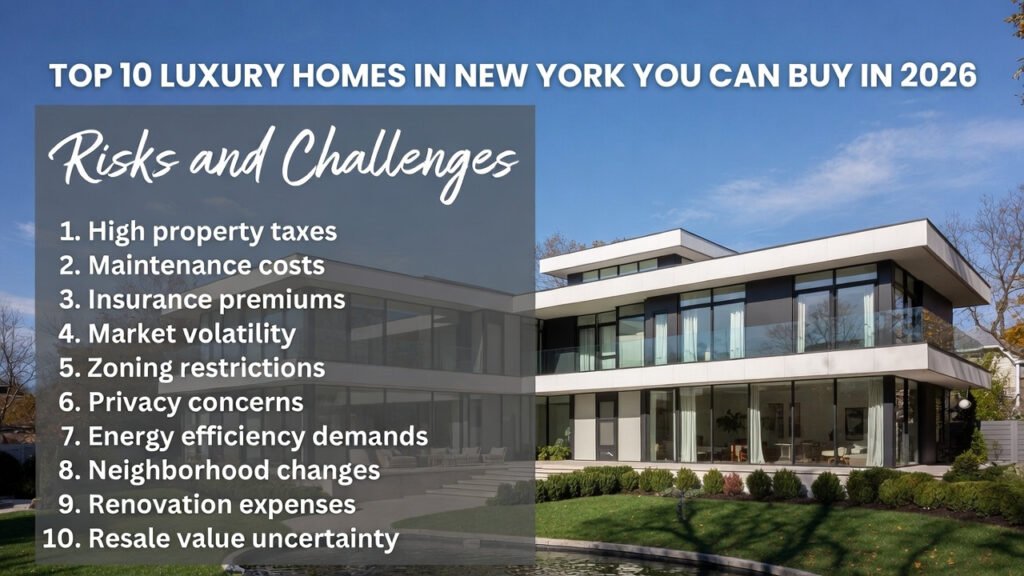
The proposed property tax increases currently being debated at City Hall represent genuine uncertainty for luxury buyers. Mamdani’s proposed 9.5% increase in the city’s property tax rate would raise the average from 12.28% to approximately 13.45%. If enacted, this would meaningfully increase annual holding costs for high-value properties.
Vacancy and Liquidity Risk
Trophy buildings on Billionaires’ Row are usually half empty because the very rich buy them as third, fourth, or fifth homes. They are good investments provided the unit chosen is unique and the timing is right. Reselling an ultra-luxury unit can take years, particularly in a softer market cycle. Buyers should not assume rapid liquidity.
Shell Company Scrutiny
International buyers who have historically purchased through LLCs and shell companies face increasing regulatory oversight. In 2016, the United States Treasury Department announced it would start identifying and tracking the purchase of multi-million-dollar units paid for in cash or via shell companies. Compliance requirements have expanded since then and should be reviewed with legal counsel.
Market Concentration Risk
There are only a handful of true $100M+ properties available at any time. While scarcity supports prices, it also means a single large transaction — or the absence of one — can disproportionately affect market statistics and sentiment.
Expert Tips for Buyers and Investors
Prioritize Central Park exposure. In buildings like Central Park Tower and 432 Park Avenue, the view differential between park-facing and non-park-facing units has a material impact on both price and future resale value. Do not compromise on this unless the price reduction is substantial.
Engage a buyer’s broker with ultra-luxury specialization. Many of the most desirable units in this tier trade off-market or before formal listing. Brokers with established relationships in the supertall segment access deals that never reach public platforms.
Model full carrying costs, not just purchase price. Common charges, property taxes, mansion tax, and closing costs can add 5–10% to your initial outlay and thousands of dollars monthly to your ongoing obligations. Run realistic long-term models before committing.
Understand the branded-residence premium. Buildings with hotel brand affiliations — Aman, Four Seasons, and similar — typically command a price premium over comparable unbranded units. That premium may not hold equally in all resale scenarios.
Think in decades, not years. Manhattan consistently outperforms most U.S. markets over 10-year holding periods. The combination of supply constraints from island geography and zoning, global demand, and rental income potential makes Manhattan real estate one of the strongest long-term investments in residential property. Short-term flipping strategies carry significant risk in this segment.
Key Takeaways
- Manhattan’s luxury market is rising sharply in 2026, with condo prices up over 20% year-over-year and luxury sales exceeding $12 billion.
- The most prized properties — full-floor residences and penthouses along Billionaires’ Row — are available but require buyers to navigate complex financial, legal, and tax considerations.
- The 111 West 57th Street quadplex, listed at $110 million, is currently the most expensive active listing in New York City.
- Vacancy rates remain high in supertall towers; buyers should plan for long holding periods and assess liquidity risk carefully.
- Proposed property tax increases in New York City represent a near-term risk that could increase annual carrying costs for high-value properties.
Frequently Asked Questions
What qualifies as a luxury home in New York City in 2026? In the New York City market, “luxury” typically refers to properties priced above $3 million. The ultra-luxury or trophy segment begins around $10 million and includes full-floor residences, duplexes, and penthouses in Manhattan’s most prestigious buildings. The true ultra-prime segment starts at $50 million or above.
Where is Billionaires’ Row in Manhattan? Billionaires’ Row is centered along 57th Street in Midtown Manhattan, running roughly from 53rd Street to 60th Street between Park Avenue and Broadway, along the southern edge of Central Park. It is home to the world’s tallest residential towers, including Central Park Tower, Steinway Tower, and 432 Park Avenue.
What is the most expensive home ever sold in New York? Ken Griffin’s purchase at 220 Central Park South — reportedly covering multiple floors — remains the most expensive residential transaction in United States history, with figures cited at approximately $238 million to $250 million.
Are Billionaires’ Row apartments good investments? They can offer long-term capital preservation and portfolio diversification, particularly for international buyers seeking dollar-denominated assets. However, rental yields in the ultra-prime tier are typically low, vacancy rates are high, and liquidity can be limited. These properties historically function better as wealth preservation tools than income-generating investments.
What are the typical closing costs for luxury property in New York? Closing costs in New York are among the highest in the country. Buyers should budget approximately 3–6% of the purchase price, which includes mansion tax (1%–3.9% depending on price), title insurance, attorney fees, and any applicable transfer taxes.
Can foreign nationals buy luxury property in New York? Yes. There are no citizenship restrictions on purchasing real estate in New York. However, purchases made through shell companies and LLCs face increasing transparency requirements, and international buyers should work with legal counsel familiar with FINCEN reporting obligations and FIRPTA tax rules.
What amenities are standard in Manhattan’s top luxury buildings? At this tier, amenities typically include 24-hour concierge and doorman service, private fitness centers and wellness spas, resident lounges, screening rooms, private dining, and, in some cases,s hotel-branded services (as with the Aman residences). Central Park Tower features a restaurant and clubhouse on its 100th floor.
Is now a good time tobuy ay luxury property in New York? The market is active, and prices are rising, which can create urgency. However, proposed property tax increases and high carrying costs introduce meaningful risk. Buyers with long holding horizons and genuine financial flexibility may find opportunities, while those seeking quick appreciation should approach with caution.
Conclusion
New York’s luxury real estate market in 2026 is simultaneously one of the most compelling and most complex property environments in the world. The fundamentals driving demand — island geography, global brand recognition, supply scarcity, and the concentration of high-net-worth buyers — have not changed. What has changed is the political environment surrounding taxation, transparency, and the vacancy problem that makes Billionaires’ Row both a symbol of extreme wealth and, at night, a vertical ghost town.
For buyers with the means to participate, properties like the Steinway Tower penthouse, full-floor residences at Central Park Tower, or the pre-war limestone co-ops of the Upper East Side can offer genuine long-term value. But this is a market where due diligence matters enormously — on carrying costs, tax obligations, resale timelines, and the specific unit within each building.
Trophy properties in Manhattan have historically preserved and grown wealth over decade-long horizons. That pattern may continue. But the most informed buyers enter with clear eyes about both the opportunity and the risks involved.
Internal Linking Suggestions
- [Manhattan condo buying guide for international buyers] → anchor text: “buying a Manhattan condo as an overseas investor.r”
- [Upper East Side real estate market overview 2026] → anchor text: “pre-war luxury co-ops on the Upper East Side.”
- [Tribeca real estate: what buyers need to know] → anchor text: “luxury homes in TTribecaeca”
- [How much does it really cost to buy property in New York?] → anchor text: “closing costs and taxes for NYC property buyers.yers”
- [Best luxury neighborhoods in New York for long-term investors] → anchor text: “top Manhattan neighborhoods for property investors.tment”
External Sources:
- Wikipedia – Billionaires’ Row
- Miller Samuel / Douglas Elliman Manhattan Market Report
- Real Estate Board of New York (REBNY)
- National Association of Realtors
This content is for informational purposes only and should not be considered financial or investment advice. Real estate markets are subject to change. Always consult a licensed real estate professional and qualified financial advisor before making any property purchase decision.