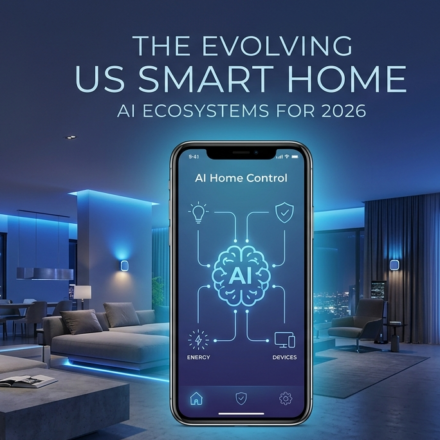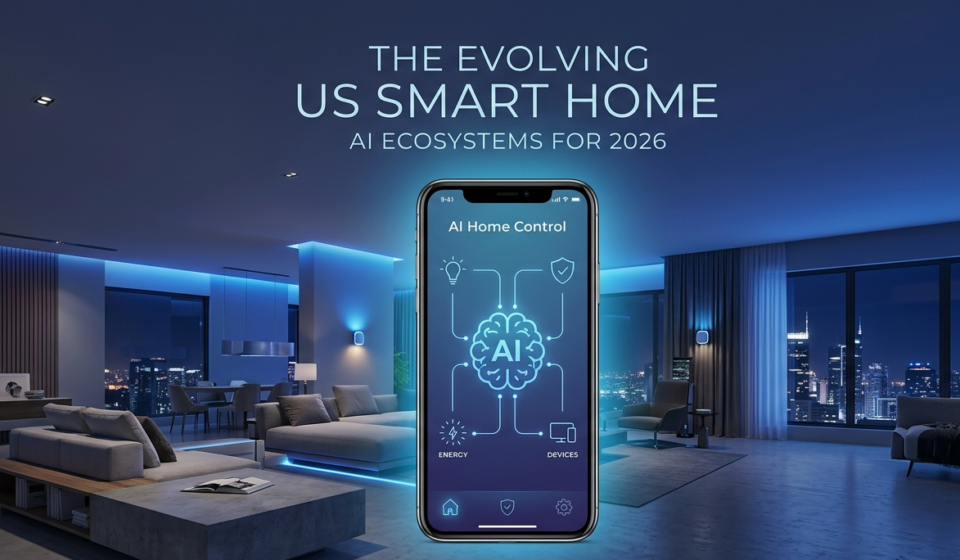

- Smart home adoption is shifting from novelty gadgets to serious home infrastructure investments, with AI and interoperability driving purchase decisions in 2026
- The Matter protocol is finally gaining real traction, reducing buyer hesitation about device compatibility and creating a more cohesive ecosystem
- High-income homeowners and property investors are seeing smart home tech as a value-add that influences appraisals, insurance rates, and utility savings
- Installation costs remain a barrier for most buyers, but professional integration services are becoming more accessible and affordable across US markets
INTRODUCTION
The smart home market has matured. We’re past the phase where people buy a smart speaker just to feel trendy. What’s happening now is different. Homeowners and investors are treating smart home technology as actual infrastructure. They’re asking harder questions: How will this affect my home’s value? Can these devices actually talk to each other? Will this lower my energy bills?
In 2026, the smart home conversation isn’t about what’s possible anymore. It’s about what makes financial sense. The data backs this up. According to recent market analysis, the US smart home market continues to expand, but the composition of that growth has shifted dramatically. We’re seeing fewer impulse purchases of standalone gadgets and more strategic investments in complete home automation systems.
This article breaks down what’s really happening in the 2026 smart home market, who’s actually buying, and whether these investments make sense for your property.
MARKET SNAPSHOT
| Metric | Status |
|---|---|
| US Smart Home Market Size | Steady growth, $100B+ annually |
| Primary Buyer Segment | High-income homeowners (ages 35-55) |
| Fastest-Growing Category | Energy management systems |
| Average Smart Home Installation Cost | $5,000 – $25,000+ |
| Matter Protocol Adoption | Accelerating (2024-2026) |
| Property Value Impact | 1-3% premium in desirable markets |
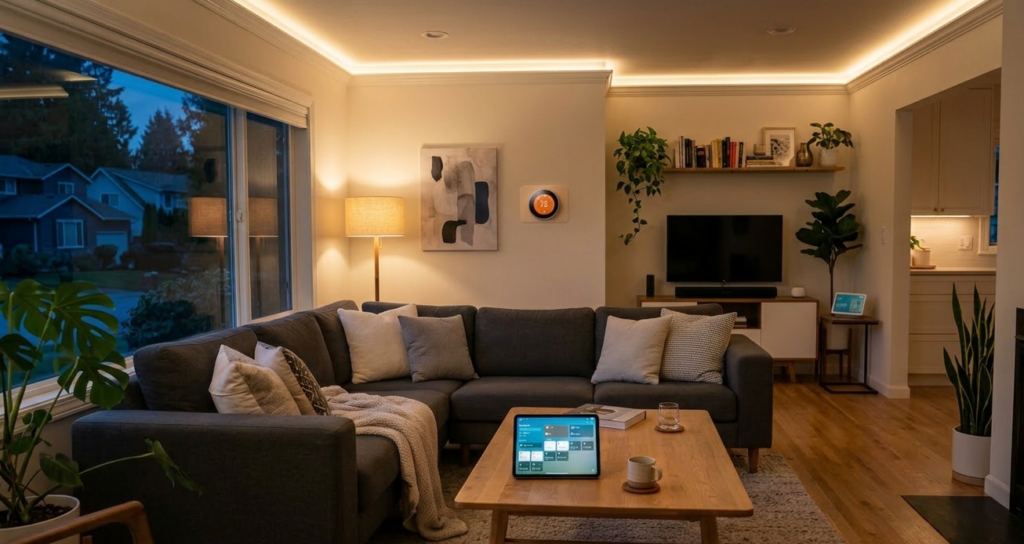
Smart Home Guide 2026 – What to Buy, Platform Updates, and More!

Understandin,g Smart Home Technology in Today’s Real Estate Market
Smart home technology isn’t new. What’s new is that it’s stopped being optional.
Back in 2020, smart home features were nice-to-haves. A ring doorbell. Maybe a smart thermostat. Today, serious home buyers and investors are treating these systems like they treat HVAC or electrical upgrades. They’re factoring installation into renovation budgets. They’re asking whether the tech will still be relevant in five years.
The shift happened because of three things. First, interoperability finally got better. The Matter protocol, backed by Apple, Google, Amazon, and others, means devices from different manufacturers can actually work together without constant troubleshooting. Second, the financial case became clearer. Smart thermostats and energy management systems can genuinely reduce utility bills. Insurance companies are offering discounts for smart security systems. Appraisers are noticing these upgrades. Third, generative AI is making these systems smarter. Your home automation now learns your preferences. It anticipates your needs instead of just responding to commands.
For investors, this matters because it changes how properties compete in the market. A rental property with a functional smart home system attracts higher-quality tenants. It justifies premium pricing. For owner-occupants, it means lower operating costs and better resale value.
Market Trends and Demand Analysis
The demand picture for smart home technology in 2026 tells us something important: the market is fracturing by income level and property type.
Let’s start with what’s growing fastest. Energy management systems are exploding. Smart thermostats, solar integration systems, EV charging monitors, and battery backup solutions are no longer niche products. Homeowners are installing these specifically because they reduce bills or because they’re planning to install solar. The intersection of smart home tech and renewable energy is where the real investment is happening right now.
AI-driven home automation is the second major trend. Not gimmicky voice commands, but actual predictive intelligence. Systems that learn when you’re home, adjust heating and cooling automatically, detect water leaks before they become disasters, and optimize lighting based on circadian rhythms. These aren’t theoretical anymore. They’re shipping products that people are paying for.
The adoption curve, though, still skews heavily toward high-income homeowners. According to various market reports, households earning over $100,000 annually account for the majority of smart home spending. This isn’t just about affording the technology. It’s about valuing the time savings and understanding the ROI on energy reduction.
Supply hasn’t caught up with demand in the installation service space. This is actually creating opportunity. There’s a shortage of qualified smart home installers in most US markets. The ones who exist are charging premium rates. For investors, this means either learning to do these installations properly or budgeting for professional services that don’t come cheap.
Interest rates are still a factor, though less than they were in 2023-2024. Smart home investments are usually bundled into larger home improvement or property purchase decisions, so mortgage rates still influence the overall market, but smart home tech specifically isn’t as rate-sensitive as it used to be.
Investment Opportunities and Property Options
Where are the real opportunities here? Let’s be specific.
Rental properties in tech-forward markets stand to benefit the most. If you’re investing in rentals in markets like Austin, Denver, Portland, or the San Francisco Bay Area, smart home features actually market themselves. Younger tenants specifically seek out properties with good automation systems. You can charge higher rent for a unit with smart thermostats, keyless entry, and integrated security. That’s real money.
Multi-unit properties are where professional smart home integration starts making financial sense. When you’re managing five or ten units, the per-unit installation cost goes down. Centralized monitoring becomes valuable. You can optimize energy usage across the entire property, not just one unit.
Properties targeting aging-in-place demographics are another clear opportunity. Smart home technology, when installed thoughtfully, makes homes safer for older occupants. Fall detection, medication reminders, voice-controlled lighting, door locks that respond to Apple Watch or smartphone, emergency alert systems. For investors focusing on senior housing or for families planning multigenerational homes, this is a competitive advantage worth paying for.
High-end residential markets (homes over $1 million in most regions) increasingly expect smart home infrastructure as standard. Buyers at this price point assume integrated automation will be there. The question isn’t whether to include it, but how comprehensive to make it.
Short-term rental properties (vacation rentals, Airbnb-style investments) see measurable ROI from smart locks and automated check-in systems. You reduce friction for guests, you reduce turnaround time between bookings, you reduce key management headaches. These are direct productivity improvements.
One caution here: don’t confuse market demand with a guarantee. Smart home technology is still evolving. The system you install in 2026 might feel dated in five years. Choose platforms and devices that have staying power. Matter protocol adoption is the safest long-term bet because it reduces vendor lock-in.
Cost Breakdown and Financial Considerations
Let’s talk actual money.
A basic smart home setup (thermostat, a few light switches, door lock, security camera) runs between $2,000 and $5,000 installed. If you’re doing it yourself with basic tools and patience, you might hit $1,000 to $2,000. But most people either don’t have the technical skills or don’t want to spend weekends troubleshooting connectivity issues.
A mid-range setup (everything above plus whole-home lighting control, energy monitoring, irrigation automation, smart doorbell) runs $8,000 to $15,000 installed. This is the sweet spot for most homeowners and rental property investors. You get enough functionality to see real utility savings and enjoy genuine convenience. You’re not over-engineering it.
A comprehensive, professionally-designed system (everything above plus centralized home automation hub, AI-driven predictive controls, security system integration, EV charging management, solar monitoring) can easily hit $20,000 to $40,000 or higher, depending on home size and complexity. This is the space where you’re seeing the most investor activity right now.
Here’s the financial reality table:
| Cost Category | Basic Setup | Mid-Range | High-End |
|---|---|---|---|
| Device costs | $800-1,500 | $3,000-5,000 | $8,000-15,000 |
| Professional installation | $1,000-2,000 | $3,000-6,000 | $8,000-15,000 |
| Annual maintenance/subscriptions | $200-400 | $400-800 | $800-1,500 |
| Typical ROI timeline | 5-7 years | 4-6 years | 3-5 years |
The ROI math works like this. A smart thermostat saves most households $150 to $300 annually on heating and cooling. Smart lighting can save another $100 to $200. Security system discounts from insurance companies can save $200 to $600 per year. Those numbers add up. On a $10,000 investment, you’re looking at recouping costs in 4-5 years, assuming energy prices don’t drop significantly.
For rental properties, the ROI is different. You’re not necessarily saving money directly. You’re capturing premium rent and reducing vacancy rates. A property with a functional smart lock, keyless entry for property managers, and remote monitoring capabilities justifies 5-10% higher rent in competitive markets. That changes the financial equation entirely.
Risks and Challenges
This is where I need to be straight with you.
Smart home technology adoption still comes with real headaches. Compatibility issues aren’t solved yet, despite what Matter protocol supporters claim. You’ll still run into situations where a device works 90% of the time but fails randomly. You’ll have WiFi connectivity problems. You’ll discover that the system you installed three years ago no longer receives software updates and you’re stuck with aging security patches.
Technology obsolescence is real. The smart home device you buy in 2026 might not be compatible with whatever new standar,d emerges in 2029. You could be forced to replace entire systems sooner than expected. This is why I keep emphasizing Matter adoption. It’s the closest thing we have to a future-proof standard right now.
Privacy and security are legitimate concerns. Smart home devices are constantly connected. They’re collecting data about when you’re home, when you leave, your temperature preferences, your energy usage patterns. Some of that data is valuable to marketers and advertisers. Some of it goes to cloud servers you don’t fully control. Look for systems with adgeputing (local processing, not cloud-dependent) and strong encryption. The US Cyber Trust Mark program is starting to make a difference here, but it’s still in early stages.
Installation quality matters enormously and varies wildly. A bad installation can create security vulnerabilities, network bottlenecks, or systems that flat-out don’t work. You need either genuine technical expertise or a qualified installer. There’s not really a middle ground. Cut-rate installations will haunt you for years.
Financing costs have come down from their 2023 peaks, but if you’re financing smart home improvements separately, you’re looking at 5-10% interest rates for home improvement loans. That affects the math on smaller upgrades. Sometimes you’re better off spreading the installation over time rather than doing it all at once.
Rental property complexity increases with smart home systems. Your tenant needs to understand how to use the system. Remote access systems need security protocols. Failure of smart devices creates a maintenance liability. You’re adding a new category of things that can break.
Expert Tips for Buyers and Investors
Here’s what actually works if you’re considering smart home technology.
Start with the energy piece. Smart thermostats and energy monitoring deliver the clearest ROI. Install these first. Don’t get seduced by voice-controlled lighting or novelty devices until you’ve solved the energy question. The financial case is strongest there.
Choose platforms carefully. I’m seeing the most future-proof success with systems built on Matter protocol standards. Apple HomeKit is reliable. Google Home is ubiquitous. Amazon Alexa has the most integrations. But what matters is whether the devices you want support these platforms. Don’t let brand loyalty override functionality.
For rental property investors, prioritize security and access control. Smart locks and keyless entry systems deliver immediate operational value. You spend less time managing key distribution. You reduce lockouts. You can grant temporary access to contractors without meeting them physically. That’s pure ROI.
Hire professional installation for anything beyond basic light switches and thermostats. I know it costs more upfront, but amateur network design will create problems that can cost you in frustration and troubleshooting. Professionals understand WiFi coverage, network bandwidth, security architecture. Pay for that expertise.
Think about your timeline. If you’re planning to sell a property within three years, smart home investment might not pencil out. If you’re holding long-term, it makes more sense. Appraisers and buyers do notice these systems, but the value premium hasn’t fully materialized yet in all markets. In five years, that will probably change. In three years, maybe not.
Document everything. Keep receipts, photos of installation, warranty information, and setup credentials organized. If you’re renting the property, this documentation protects you when something goes wrong. It also matters when you sell. The next owner will want to know what’s installed and how to operate it.
Don’t over-engineer for your market. A $40,000 smart home system might not add $40,000 to your property value in most US markets yet. Aim for the mid-range approach. Get systems that genuinely improve daily life or operating efficiency. Skip the vanity stuff.
KEY TAKEAWAYS
- Smart home technology in 2026 is driven by real financial benefits (energy savings, insurance discounts, higher rental premiums) rather than novelty
- The Matter protocol is finally making true interoperability possible, reducing. The risk of buying devices that won’t work together
- High-income homeowners and rental property investors see clear ROI from mid-range. ange smart home installations ($8,000-$15,000)
- Professional installation is worth the cost. DIY is fine for basic stuff, but network design, security, and integration need expertise
- Don’t wait for perfect technology. The systems available in 2026 are solid enough. Waiting for the next generation will cost you years of energy savings and convenience benefits
FAQ SECTION
Q1: Will a smart home system increase my property’s resale value?
Smart home systems can add 1-3% to property value in tech-forward markets like Austin, San Francisco, and Denver. In other regions, the premium is smaller or nonexistent. Focus on systems that reduce costs (energy) or add genuine convenience rather than expecting appraisal increases.
Q2: Is the Matter protocol actually better than existing systems?
Matter reduces device compatibility issues and vendor lock-in. It’s more open than proprietary platforms. For most buyers, it’s the safer choice because it’s less likely to become obsolete. Existing platforms (HomeKit, Google) still work fine.
Q3: How much can I save on energy bills with smart home technology?
Smart thermostats typically save $150-$300 annually. Combined with smart lighting, water heaters, and energy monitoring, total savings reach $500-$800 per year. Actual results depend on local energy costs and your current system efficiency.
Q4: Should I hire a professional installer or do it myself?
Professional installation costs more but ensures reliability, security, and proper network design. DIY works for simple devices (thermostats, smart bulbs) but gets complicated quickly. For systems touching security or whole-home integration, hire professionals.
Q5: What’s the timeline for ROI on smart home investment?
Basic systems see ROI in 5-7 years. Mid-range systems in 4-6 years. Higher-end systems in 3-5 years. For rental properties, ROI comes faster through higher rent and faster tenant placement.
Q6: Are smart home devices a security risk?
All connected devices carry security risk. Minimize it by choosing devices with strong encryption, local processing rather than cloud-only, and manufacturers that provide regular security updates. a Chge default passwords. Use a separate network for IoT devices if possible.
Q7: Can I add smart home features gradually, or do I need to install everything at once?
Gradual installation makes sense. Start with energy management and security. Add comfort features later. This spreads costs and lets you learn the technology before committing to more complex systems.
Q8: Do insurance companies actually offer discounts for smart security systems?
Yes. Smart security systems, monitored entry points, and video surveillance typically qualify for 10-15% insurance discounts. Verify with your provider before investing, as discounts vary by insurer and property type.
CONCLUSION
The 2026 smart home market isn’t a bubble. It’s a genuine shift in how people think about residential property infrastructure. Investors and homeowners aren’t buying these systems because they’re trendy. They’re buying them because they work, they save money, and they’rebecoming stakeholderss in competitive real estate markets.
The technology has matured enough that the financial case is clear. Energy savings are real and measurable. Insurance discounts are legitimate. Rental premiums are achievable. Appraisal impacts are beginning to materialize. At the same time, the risks are manageable if you approach installation thoughtfully and choose platforms with long-term viability.
The smart money in 2026 isn’t in chasing the latest AI voice assistant or the coolest novelty device. It’s in strategic, mid-range smart home investments that solve real problems. Energy management first. Security and access control second. Convenience features last.
If you’re buying a home to live in, a $10,000 smart home installation probably makes sense if you’re planning to stay five years or longer. If you’re an investor, the case is even clearer. Rental properties with functional smart home systems perform better. They attract better tenants. They justify higher rents. Valuation multiples are improving.
The market will probably shift again in 2027 or 2028. New standards will emerge. New devices will appear. The systems you install in 2026 might feel dated in five years. But that’s always true with technology. The question isn’t whether to wait for perfection. The question is whether the current generation offers enough value to justify investment. For most property owners and investors, the answer is yes.
INTERNAL LINKING SUGGESTIONS
DISCLAIMER
This content is for informational purposes only and should not be considered financial or investment advice. Smart home technology varies widely by location, property type, and individual circumstances. Consult with qualified real estate professionals and technology specialists before making investment decisions. Energy savings, property value increases, and insurance discounts are not guaranteed and depend on many factors, including local market conditions, product quality, and proper installation.