
- Solar installations continue to improve ROI for US homeowners, with installation costs dropping and federal tax credits remaining at 30% through 2032.
- Energy-efficient upgrades like heat pumps and smart thermostats work alongside solar to reduce energy consumption and increase property value.
- Perovskite solar cells and bifacial panel technology are moving from labs to residential installations, offering higher efficiency at lower costs.
- Property investors can participate in Virtual Power Plant (VPP) programs to generate additional income from residential solar batteries.
INTRODUCTION
We’re seeing a real shift in how property investors and homebuyers approach energy costs. Solar isn’t just an environmental choice anymore. It’s become a serious financial decision. If you own property in the US, solar panels combined with energy-efficient upgrades can directly impact your monthly expenses and resale value. The good news? 2026 brings clearer incentives, better technology, and more realistic ROI expectations than we’ve seen in years. What used to be a 10-year payback is now sometimes closer to 6-7 years for homeowners in high-electricity-cost states. This guide walks you through what’s actually happening with residential solar and efficiency upgrades in 2026, what the real numbers look like, and how to evaluate whether these investments make sense for your property.
MARKET SNAPSHOT
| Metric | 2026 Status |
|---|---|
| Average Solar Installation Cost (5 kW) | $12,000–$15,000 (post-incentive) |
| Federal Investment Tax Credit (ITC) | 30% through 2032 |
| Typical Residential Payback Period | 6–8 years (high-usage states) |
| Average Home Battery Cost (10 kWh) | $8,000–$12,000 (post-credit) |
| State-level Solar Incentive Availability | 40+ states have active programs |
| Heat Pump Adoption Trend | Rising (20%+ annual growth) |
| Virtual Power Plant Participation | Growing (pilot programs in CA, TX, NY) |
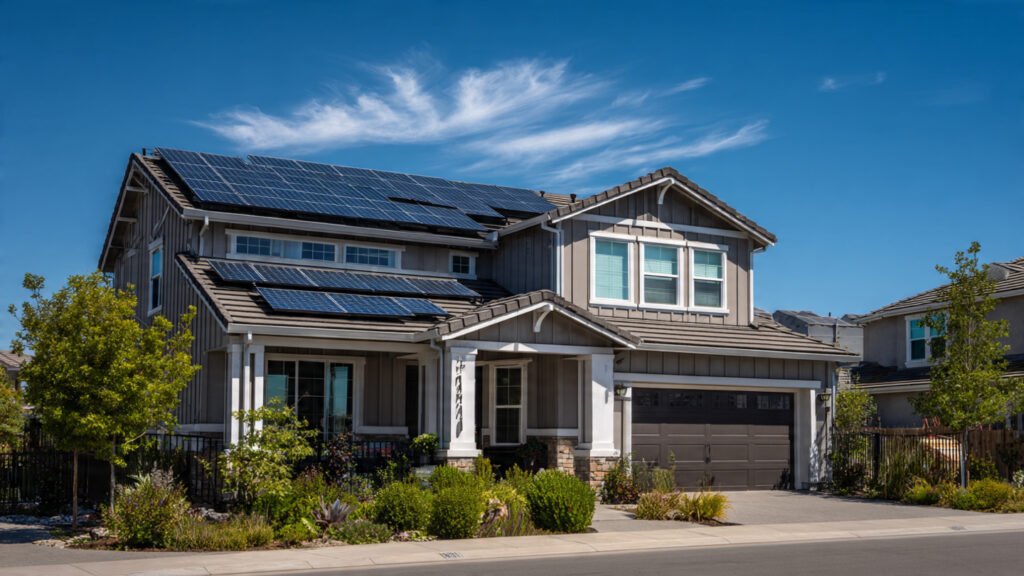
Solar Panels After 1 Year: Are They Worth It?

UNDERSTANDING SOLAR AND ENERGY-EFFICIENT UPGRADES
Solar panels don’t work in a vacuum. Combine them with better insulation, a modern HVAC system, and a smart thermostat, and you’re actually reducing the size of the system you need. That’s the real insight that separates smart investors from people who just install panels and hope for the best. Energy efficiency is the first step. Then you add solar.
Here’s what happens. A typical US home uses about 877 kilowatt-hours per month. That number varies wildly by state, climate, and lifestyle. But if you tighten the building envelope—seal air leaks, upgrade insulation, replace old windows—you might cut that down to 650 kWh. Now your solar system doesn’t need to be as big. Smaller system means lower cost and faster payback.
Heat pumps are the workhorse of modern home energy management. They’re basically air conditioners that run in reverse during heating season. A modern heat pump can deliver more BTUs of heating or cooling per unit of electricity than traditional furnaces or window AC units. They’re expensive upfront, sure. But combined with the federal tax credit now available for heat pump installation, the math changes significantly.
Virtual Power Plants change the game entirely. Here’s the concept: your home battery becomes part of a network. When the grid needs power, your battery discharges, and you get paid. When electricity prices drop, your system charges up. You’re essentially selling capacity to the utility. Right now,w this is mostly in California, Texas, and parts of New York. But it’s expanding. For property investors, VPP income can add $50–$150 monthly to cash flow on top of solar savings.
MARKET TRENDS AND DEMAND ANALYSIS
Residential solar installations in the US have been climbing consistently. The Solar Energy Industries Association reported that residential solar now represents about 40% of all new solar capacity additions in America. That’s homes and small buildings, not utility-scale farms.
Why the uptick? Three things. First, installation costs have dropped by about 70% over the past decade. Second, the federal tax credit got extended to 30% for new systems through 2032, removing a major barrier. Third, homebuyers and investors are starting to view solar as standard maintenance, not a luxury add-on. It’s becoming table stakes in competitive real estate markets.
We’re also seeing stronger state-level incentives kick in as 2026 progresses. New York’s Solar Pioneer fund is expanding. California is pushing residential battery storage through the SGIP program. Massachusetts continues to fund residential heat pump retrofits. These aren’t cosmetic. They materially change the financial case for energy upgrades.
Battery storage is where things get interesting for investors. Tesla’s Powerwall costs around $11,000 installed. LG Chem’s RESU is in a similar range. A decade ago, batteries were almost a novelty. Now they’re fundamental to VPP programs and demand response initiatives. If you install a battery in 2026, you’re not just storing energy for blackouts. You’re creating an asset that can generate income during peak demand hours.
Interest rates still matter. Residential solar financing is tight. If you’re borrowing to finance installation, expect rates in the 6.5–8% range. That impacts ROI calculations significantly. A homeowner with cash canget at 6-year payback. Someone financing at 7.5% might see 8-9 years. Still solid, but not transformative.
The rental market is quieter. Landlords are slower to adopt solar than owner-occupants because the economics are messier. Tenants don’t stay forever. The landlord makes the capital investment but doesn’t see the energy savings. Some states are trying to solve this with solar renter programs, but they’re still pilot-stage. If you’re a small landlord holding single-family rentals, Solarin pilot stagertfolio is still mainly a value-add for sale, not operating income.
INVESTMENT OPPORTUNITIES AND ENERGY UPGRADE PATHS
High-growth neighborhoods shift based on solar adoption rates and electricity costs. If you’re looking at a real estate market with both rising property values and above-average electricity rates, solar makes financial sense quickly.
California markets—Los Angeles, San Diego, the Bay Area—have the fastest solar adoption. Electricity costs are $0.18–$0.22 per kWh, way above the national average. A 5 kW system in San Diego saves about $1,100 annually on electricity. Add home appreciation from energy efficiency upgrades, and you’re looking at 7–8% annual returns in some scenarios. Austin and Dallas are catching up. Texas electricity rates were historically low, but rising demand is pushing rates higher. Solar adoption is accelerating.
Florida is unique. High electricity rates, heavy air conditioning loads, and a wealthy retiree population create demand for solar and batteries. But the hurricane-resistance question is real. Modern solar installations include engineered racking that holds panels during 150+ mph winds. If you’re a Florida landlord or own investment property there, hurricane-resistant solar plus a battery is becoming standard practice. Renters and buyers expect it.
The Northeast is slower, but changing. New York, Massachusetts, and Connecticut have strong incentive programs now. Boston’s electricity costs $0.20 per kWh. But the climate is cloudier than in California. Solar payback is longer, maybe 8–10 years without state incentives. With rebates, 6–7 years becomes realistic.
Rental property opportunities are clearer if you can increase rental rates to reflect solar efficiency. A single-family rental with solar plus efficient HVAC can command an extra $100–$200 monthly rent in most markets. Over a 5-year hold, that’s $6,000–$12,000 in additional gross income. Tenants increasingly want to rent in efficient homes. Energy costs come out of their pocket. They’ll pay more rent to lower their utilities.
Long-term appreciation potential compounds. A solar system adds $4–$6 per watt to home sale prices on average. A 6 kW system means a $24,000–$36,000 price bump at sale. That’s real money. Energy Star-rated homes sell faster and command higher prices. If you’re buying a property to hold 10+ years, energy efficiency upgrades front-load future value.
COST BREAKDOWN AND FINANCIAL CONSIDERATIONS
Here’s where numbers get practical.
| Expense | Estimated Range (US Average) |
|---|---|
| Solar Installation (5 kW) | $15,000–$19,000 (before incentives) |
| Federal Tax Credit (30%) | -$4,500–$5,700 |
| Net Solar Cost | $10,300–$14,300 |
| Heat Pump Installation (full home HVAC replacement) | $8,000–$12,000 |
| Federal Heat Pump Tax Credit (30%, max $2,000) | -$2,000 |
| Net Heat Pump Cost | $6,000–$10,000 |
| Home Battery System (10 kWh Powerwall-class) | $11,000–$14,000 |
| Battery Tax Credit (30%) | -$3,300–$4,200 |
| Net Battery Cost | $7,700–$10,800 |
| Smart Thermostat + Weatherization | $500–$1,500 |
| Total Combined Investment | $24,500–$36,600 |
For a homeowner with a $200,000 home in California paying $180 per month in electricity, here’s the real-world scenario:
Solar alone saves $1,100 annually. Heat pump upgrade reduces heating and cooling by 40%, saving another $400 annually during heating season. Net savings hit $1,500 per year. After federal credits, net investment is about $16,000. That’s a 9.4% annual return in year one, declining over time as the system ages. Payback hits around 7 years. After year 7, you’re getting essentially free electricity for the remaining 23-year lifespan of the panels.
But there are costs beyond installation. Maintenance runs $150–$300 annually for solar. Inverter replacement happens around year 12-15 and costs $2,500–$4,000. Battery degradation means you might need replacement around year 10. These aren’t deal-breakers, but they’re real.
Financing matters enormously. If you can get a $15,000 solar loan at 5.5% for 10 years, payment is about $159 per month. Your savings are $92 per month (1100/12). You’re cash-flow negative in year one. But the federal tax credit hits in year one as well, refunding $4,500. Use that refund to pay down the loan or invest it. Now the economics work.
Property taxes sometimes increase after solar installation. It depends on your state. California has protections—solar doesn’t increase your assessed value for property tax purposes. Texas and Florida are similar. New York, Massachusetts, and Connecticut vary. Check your local assessor’s office. It matters.
Insurance premiums sometimes dip after solar installation, sometimes stay flat. Your homeowner’s policy should cover solar, and some insurers give discounts for home safety upgrades. Ask your agent directly.
RISKS AND CHALLENGES
Solar isn’t risk-free. Let’s be direct about that.
Performance risk is real. Your 5 kW system is rated to produce 5 kW in optimal conditions. But that’s peak output. Actual output depends on sun angle, cloud cover, shade, panel orientation, temperature, and inverter efficiency. A well-installed system typically produces 75–85% of its rated capacity annually. If you run the numbers assuming 95% capacity factor, you’ll be disappointed. Use 80% as your baseline estimate.
Roof condition matters. If your roof has 10 years of life left, installing solar doesn’t make sense. You’ll need to reroof later, and it’ll cost extra to remove and reinstall panels. Get your roof inspected first. If you need work, do it before solar.
Battery degradation is real. Lithium batteries lose capacity over time. LFP batteries (Lithium Iron Phosphate), which are becoming more common, degrade slower than NCM chemistry. After 10 years, expect 80–90% of the original capacitmore slowlyt’s not catastrophic, but it means your stored energy drops. If you’re banking on battery income from a VPP program, this matters.
Grid interconnection delays are common, especially in fast-growing solar markets. California routinely sees 6-month delays between installation and actual grid connection. Texas is faster. It’s annoying and kills cash flow projections if you’re not accounting for it.
Regulations change. State solar incentives are political decisions. What exists in 2026 might not exist in 2030. Don’t base your entire investment thesis on subsidies that could disappear. Count on them as a bonus, not the foundation.
Interest rate risk affects financing. If you’re locking in a solar loan at 6.5%, rates could drop. But they could also rise. Make sure the math works even if rates stay elevated.
Supply chain risk is low now but possible. Solar panels, inverters, and batteries are global products. T,ariffs or shipping delays could affect costs. It’s not a dealbreaker but keep it in mind if you’re planning installations 12+ months out.
EXPER, T TIPS FOR BUYERS AND INVESTORS
Start with an energy audit. Before you spend a dollar on solar or heat pumps, get a professional energy audit. It costs $200–$500 and identifies where your home is bleeding energy. Maybe it’s insulation. Maybe it’s air leaks around the windows. Maybe your HVAC system is just old and inefficient. Fix the biggest problems first. Then solar’s smaller system can handle the remaining load.
Get multiple bids. Solar installation quality varies wildly. A system installed poorly produces 5–10% less energy than an identical system installed correctly. Get at least three quotes from licensed installers with active references. Check Google reviews and BBB ratings. Don’t pick the cheapest option automatically.
Understand your local incentives. Some states give rebates on top of the federal tax credit. California, New York, and Massachusetts have state programs. Check the Database of State Incentives for Renewables & Efficiency (DSIRE) online. Real incentives can add $3,000–$8,000 to your scenario.
Finance strategically. If you can pay cash and have no mortgage, do it. But most people finance. Compare solar loans, HELOC, cash-out refinance, and leases carefully. A solar loan is simpler than HELOC. Leases are easier than ownership but you don’t get the tax credit or the system value at sale.
Size for your actual usage. Oversizing a solar system wastes money. Some companies push 8–10 kW systems on homes that use 8 kW annually. You don’t need that. Overproduction just goes to the grid for a pittance or gets lost. Size to your usage, then add 20% buffer for growth.
Stack upgrades strategically. If your HVAC is old, replace it with a heat pump and get that tax credit. Then add solar. Then add a battery. The order matters for financing and ROI. Don’t do everything at once unless you can pay cash.
Monitor your system after installation. After year one, pull your production reports from your monitoring app. Is it matching projections? If it’s 15% belowthe estimate, contact the installer. Could be a wiring issue or a firmware bug in the inverter. Small problems caught early save huge headaches.
Check zoning before buying investment property. Some neighborhoods have HOA restrictions on solar. Ride through the area, check for other solar installations. Talk to the HOA. If there’s resistance, move on.
KEY TAKEAWAYS
- Solar payback periods for US homes now range from 6–8 years in high-cost electricity states, with federal tax credits at 30% through 2032.
- Energy efficiency upgrades like heat pumps and weatherization reduce energy demand first, making solar systems smaller and more cost-effective.
- Battery storage is becoming income-generating through Virtual Power Plant programs, particularly in California, Texas, and parts of New York.
- State-level incentives are expanding but shouldn’t be the only basis for investment decisions—focus on the econo,m ics without subsidies first.
- Investment property owners can justify solar installations through rental rate premiums or resale value increases, especially in growing markets.
FREQUENTLY ASKED QUESTIONS
How long do solar panels last? Modern solar panels have a lifespan of 25–30 years. They degrade slowly, about 0.5% annually. After 25 years, panels typically produce 80–85% of their original output. Inverters last 10–15 years and usually need replacement once during the system lifetime.
Will my electric bill really go to zero with solar? In sunny states, homes can go net-zero or net-negative (producing more than they use). But “zero” assumes good system sizing, no shade, and optimal installation. Most homes see 70–90% of their electricity bill eliminated. The remaining bill covers grid fees and night usage. Complete zero is possible with battery backup but requires oversizing.
Is iA ccomplete installingsolar before selling my hom,e? Usually yes. Solar adds $4–$6 per watt to home value, but only if installed by professionals with proper permits. A poorly installed system actually deters buyers. If you’re selling within 6 months, skip it—installation delays will outlast your ownership. If you’re holding 2+ years, install it.
Can I install solar if my roof is shaded? Partial shade is manageable with microinverters or power optimizers. Deep shade is problematic. If more than 30% of your roof is shaded during midday, solar isn’t effective. A solar company should do a shade analysis using software that maps sun angles year-round.
Do solar systems work in winter or cloudy states? Yes, but less efficiently. Germany gets 40% the solar resource of Arizona but has 25% of world solar capacity. The economics are just slower. Minnesota and upstate the Nworld’srk are viable for solar with 8–10 year payback instead of 6–7. Skip only extremely cloudy regions like parts of the Pacific Northwest.
What happens to my solar during a power outage? Without a battery, your solar system shuts off during outages for safety reasons. The grid might be down, and line workers could be working on power lines—if your panels backfeed the grid, they could be electrocuted. With a battery backup system, you can use stored energy during outages. This is why batteries are increasingly popular.
Will I need a new electrical panel for solar? Maybe. If your panel has room (at least two breaker spaces) and your main breaker is 150+ amps, you’re probably fine. If you’re adding a battery or your panel is maxed out, you might need an upgrade. An electrician can assess this in about an hour.
Are there tax benefits beyond the federal credit? Depends on your state. Many states have no additional credits. Some have state income tax credits (Massachusetts, New York). The federal credit is the biggest benefit—30% ofthe installation cost, no income cap, no limit on the credit amount. Check your state’s DSIRE listing for extras.
CONCLUSION
Solar and energy-efficient home upgrades have moved beyond being “nice to have” into legitimate financial decisions for property investors and homebuyers in 2026. The 30% federal tax credit stays in place through 2032, installation costs continue to drop, and technology like perovskite cells and bifacial panels is becoming commercially available. For US homeowners in high-electricity-cost states, payback periods of 6–8 years are realistic. That’s better than many traditional investments.
The real insight isn’t that solar alone transforms property value. It’s that solar works best alongside other efficiency upgrades. Start with an energy audit to identify your biggest energy losses. Address those. Then add solar. Then add a battery if the economics work. Stack these strategically, and you’re building real long-term value into your property.
For investors, the path is clearer in some markets than others. Florida, California, and Texas have the strongest fundamentals right now. The Northeast is warming up as incentive programs expand. Rental property investors can justify solar through modest rent increases and faster sale prices. Single-family rental values increase 3–5% when energy-efficient systems are included.
Challenges are real. Roof condition matters. Performance won’t match marketing brochures. Financing costs impact ROI. Regulations could change. But for property that fits the profile—owned 5+ years, in a market with above-average electricity rates, in decent condition—solar makes sense.
Don’t get swept up in the hype. Do the math on your actual usage, your local electricity rates, and your financing costs. If the numbers work, move forward. If they don’t, wait. Energy costs are rising. Your situation improves every year you wait. There’s no need to rush.
INTERNAL LINKING SUGGESTIONS
DISCLAIMER
This content is for informational purposes only and should not be considered financial or investment advice. Energy costs, incentives, and technology capabilities vary by location and change over time. Consult with a licensed solar installer, tax professional, or financial advisor before making investment decisions about solar panels or energy-efficient home upgrades. Past performance and historical data do not guarantee future results.