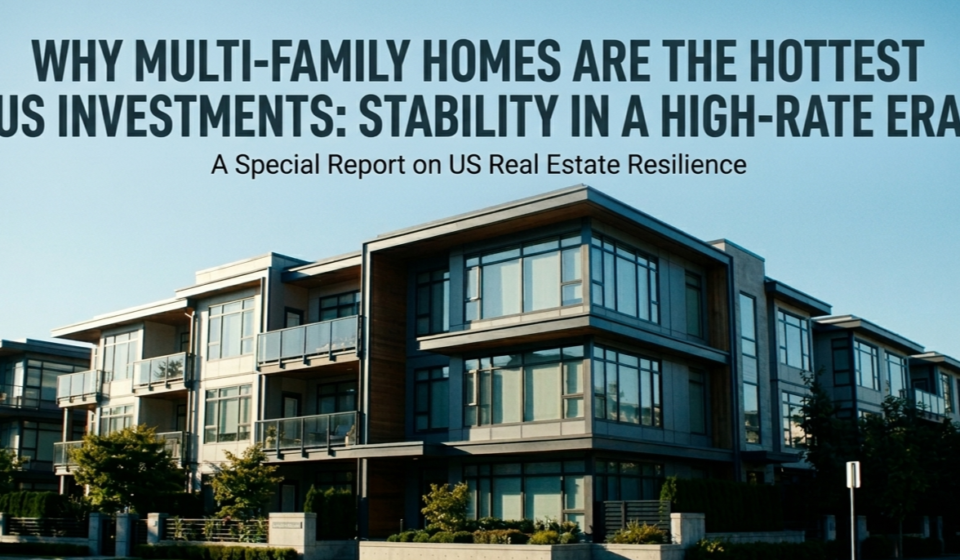
Why Multi-Family Homes Are the Hottest US Investments: Stability in a High-Rate Era

- Multi-family properties (duplexes, triplexes, apartment complexes) are outperforming single-family rentals in 2026 due to economies of scale and lower per-unit management costs.
- High interest rates have actually benefited multi-family investing because larger buildings qualify for DSCR loans and institutional financing that individual homebuyers can’t access.s
- Rental yields on multi-family properties can reach 5-8% annually when managed efficiently, with forced appreciation through unit renovations and rent increas.es
- The “Missing Middle” housing shortage is driving demand for density-focused residential properties across the. US
Introduction
Something shifted in the US real estate market around 2024-2025. Single-family rental investors watched their ROI flatten while smart money moved into duplexes, triplexes, and small apartment complexes. It wasn’t a dramatic market crash. It was quieter than that. It was a slow realization that density works better when interest rates stay high, and property taxes keep climbing.
Why? Because when you own four units instead of one, your maintenance costs per unit drop significantly. Your vacancy risk spreads across more tenants. Your financing options expand to include DSCR loans and commercial mortgages that aren’t available for single-family homes.
This article breaks down why multi-family home investment is reshaping the US residential real estate landscape in 2026, what opportunities actually exist for investors of different sizes, and how to think about the risks realistically. Whether you’re a first-time investor considering a duplex or an experienced buyer eyeing a small apartment building, you’ll find data-backed insights that actually apply to your situation.
Market Snapshot
| Metric | 2026 Trend |
|---|---|
| Rental Yield (Multi-Family) | 5-8% annually |
| Single-Family Rental Yield | 3-5% annually |
| Price Growth (Multi-Family YoY) | 2-4% in major metros |
| Investor Demand | Increasing |
| Interest Rates (Commercial) | 6.5-7.5% range |
| Average Cap Rates | 4.5-6.5% depending on market |
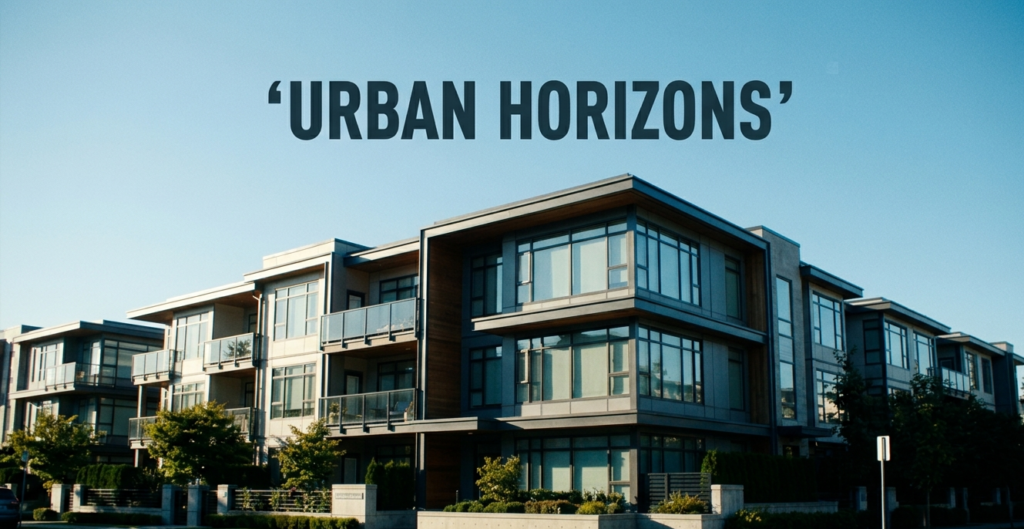
How I’d Start Multi-Family Real Estate In 2026 (If I Had To Start Over)

Understanding Multi-Family Home Investment
Let me be straight about this. A multi-family property is any residential building with multiple units under one roof or one ownership structure. That includes duplexes (two units), triplexes (three), fourplexes (four), and anything up to large apartment complexes with hundreds of units.
What makes multi-family different from buying a single-family rental isn’t just the number of units. It’s the entire business model. When you own one rental home, one vacancy means 100% of your projected income disappears. When you own a four-unit building, and one tenant moves out, you’ve still got 75% of your expected cash flow. That’s the fundamental advantage nobody talks about enough.
The other part most new investors miss is that multi-family properties qualify for different types of financing. A duplex you plan to live in (often called “house hacking”) can get an FHA loan with 3.5% down. A four-unit apartment building qualifies for commercial lending. Once you’re past single-family territory, lenders look at the property’s income, not just your personal credit score. DSCR loans literally measure whether the building’s rental income covers the debt service. That changes everything about what you can borrow and on what terms.
In 2026, that difference matters more than ever. With interest rates holding above 6%, borrowers who qualify for commercial terms are getting better loan structures than someone trying to finance a single-family house.
Market Trends and Demand Analysis
The National Association of Realtors and Zillow have been reporting something consistent over the past two years: investor activity in multi-family properties is growing while single-family investor purchases are cooling. Part of that’s economics. Part of that’s adaptation.
High-interest-rate environments actually favor multi-family. Sounds backwards, but here’s why. When mortgage rates hit 7%, individual homebuyers who were paying 3% in 2021 suddenly pulled back. New home sales drop. Rental demand goes up because renters can’t afford to buy. Meanwhile, institutional investors and experienced real estate buyers shift from competing in the single-family market (where they’re bidding against owner-occupants) into multi-family, where competition is different.
The “Missing Middle” housing shortage is real, and it’s driving real demand. By Missing Middle, analysts mean apartments and small multi-unit buildings in the range of 2-8 units. A lot of neighborhoods zoned single-family only have made it illegal to build anything denser. That creates scarcity. Scarcity creates opportunity for investors who can provide housing in those formats.
Rental yields tell the story. I’m seeing multi-family properties in secondary markets (think mid-sized metros like Memphis, Kansas City, Austin suburbs) generating 5-8% gross rental yields on the purchase price. Single-family rentals in the same markets are running 3-5%. After you subtract maintenance, taxes, insurance, and vacancy reserves, that gap actually gets wider because a four-unit building has better economies of scale.
Price growth is more modest than in 2020-2021, but that’s not necessarily bad. Cap rate compression (property values rising while rents stay flat) was a story from that period. Now we’re seeing something closer to normal. Cap rates are sitting in the 4.5-6.5% range, depending on the market, which is closer to historical averages.
Investment Opportunities and Where Growth is Happening
Not every multi-family market looks the same right now. Understanding where money should go matters as much as understanding what type of property to buy.
Strong metro areas for multi-family are places where three things line up: population growth, housing shortage, and reasonable property valuations. Austin’s no longer cheap. Denver’s competitive. But secondary markets are where investors are finding actual opportunities. Cities like Fort Worth, Nashville suburbs, Raleigh, Charlotte, and even markets in Ohio and Indiana are seeing solid rental growth and are attracting corporate relocations. This drives tenant quality and rental income stability.
Then there’s the renovation angle. Value-add multi-family means buying a building that’s functional but dated, renovating units to modern standards, then raising rents. If you buy a four-unit building where current rents are $1,200 per unit and comparable renovated units rent for $1,600, you’ve just forced appreciation. That’s not speculation. It’s a repeatable strategy. The trick is buying buildings where the math actually works and the neighborhood’s stable enough to support higher rents.
House hacking is the entry point for smaller investors. Buy a duplex or triplex, live in one unit, rent the others. Your mortgage gets paid partly by tenants. This is how a lot of successful real estate investors got started. FHA loans let you put 3.5% down on a duplex if you’ll occupy it, which completely changes the capital requirement.
Turnkey rentals exist, too, but be cautious. A “turnkey” multi-family building often means you’re paying retail prices for something that’s already been flipped. Investors making money typically find value by buying distressed or off-market properties, improving them, and selling or refinancing into long-term holds.
Cost Breakdown and Financial Considerations
Here’s what you actually spend money on with multi-family property:
| Expense Category | Estimated Range |
|---|---|
| Purchase Price (Per Unit) | $150,000-$300,000+ |
| Down Payment (Investor) | 20-25% typical |
| Down Payment (Owner-Occupied Duplex) | 3.5-15% |
| Closing Costs | 2-5% of purchase price |
| Annual Property Tax | 0.8-1.5% of value |
| Insurance (Multi-Family) | $800-$2,000+ per unit annually |
| Maintenance Reserve | 5-10% of gross rental income |
| Property Management | 8-12% of rent collected |
| Vacancy Reserve | 5-8% of gross rents |
| Expected Gross Rental Yield | 5-8% annually |
| Potential Cash-on-Cash Return | 6-15% after expenses |
What these numbers actually mean depends on where you’re buying and what you pay upfront.
Let’s work through an example. You find a four-unit building in a secondary market for $600,000 (that’s $150,000 per unit). Current rents are $1,400 per unit. Gross annual rent is $67,200. You put down 25% ($150,000). Loan amount is $450,000 at 7% over 25 years. That’s roughly $3,350 monthly payment on the mortgage.
Expenses? Property tax runs about $500 monthly ($6,000 yearly). Insurance is $1,200 yearly. You budget $3,000 for maintenance and repairs. Property management at 10% is $560 monthly. Vacancy reserve at 7% is $400 monthly. That’s $1,460 monthly in operating expenses plus $3,350 mortgage. Total monthly cash outflow is roughly $4,810 against $4,533 in rent ($1,400 x 4). That’s tight. It’s negative cash flow initially.
But wait. You have $150,000 of equity already (your down payment). As the mortgage gets paid down, that equity grows. If that building appreciates 3% yearly (modest, realistic), you’re gaining another $18,000 per year in property value. Over 25 years, you have owned the building free and clear and have collected all that rent. That’s how multi-family wealth building actually works. It’s boring. It’s not fast. It’s compound returns.
This is why forced appreciation matters. If you could renovate those units and bump rents to $1,700 per unit, gross rent becomes $81,600. Same expenses mostly, but now your cash flow is positive. That’s the value-add play.
Risks and Challenges You Need to Know
Multi-family isn’t risk-free. Pretending it is would be irresponsible.
Property taxes keep rising. Many states are reassessing properties at higher valuations, especially after recent appreciation. That $600,000 building might get reassessed by $50,000-$100,000 over five years. Your tax bill grows. In some markets, property tax can eat 2-3% of your annual rental income if you’re not careful about acquisition strategy.
Interest rate risk is real for floating-rate debt or when you refinance. Buy at 7%, rates spike to 8%, and you refinance at ha igher cost. If you lock in 25-year fixed DSCR financing, you’re protected. But many investors use adjustable commercial terms, thinking they’ll refinance before rates adjust. That’s a gamble.
Tenant risk is lower with multi-family than single-family (more diversification), but not zero. Bad tenant selection can empty occupancy fast. Eviction in unfavorable jurisdictions can take months. Maintenance emergencies (HVAC, roof, plumbing) hit harder with multiple units because it’s one system serving everyone.
Market downturns are real. If the local economy weakens and employers leave, rental demand softens. Cap rates expand (property values drop relative to income), and refinancing becomes harder. This happened in some rust belt cities post-2008 and is why market fundamentals matter more than chasing the “hottest” investments.
Regulatory risk is growing. Some cities are discussing rent control, increased licensing fees, or restrictions on investor ownership. This is more common in blue-state metros but worth monitoring.
Expert Tips for Smart Multi-Family Investing
Talk to lenders before you start shopping. Not to get preapproved for a single property, but to understand what loan products exist and what terms you’d actually qualify for. DSCR loans work differentlfroman traditionalmortgages. Commercial lenders look at different metrics. Know this before you fall in love with a property.
Analyze neighborhoods as if you’re living there. Good rent growth comes from places where people want to move, and employers are hiring. Look at job growth, population migration, and school quality if families are your tenant base. Check crime statistics, infrastructure projects, and development trends. Excel sheets don’t replace local knowledge.
Start smaller than you think. House hacking a duplex teaches you more about property management, tenant relations, and cash flow than reading any book. Many successful multi-family investors built portfolios through exactly this path. You live in one unit, manage the other yourself, and learn. After two-three years, you’ve got real experience and clarity on whether you want to scale.
Get a real inspector and a real accountant involved before closing. The inspector saves you from buying nightmare properties. The accountant helps you structure the purchase, understand tax implications, and know what deductions actually apply. These costs ($1,000-$2,000 combined) are insurance against catastrophic mistakes that cost way more.
Don’t force appreciation in bad neighborhoods. Renovating a duplex in a declining area doesn’t create value. It just means you own an updated property nobody wants. Buy in neighborhoods with momentum already happening or markets with obvious corporate demand drivers.
Consider the management model early. Will you self-manage or hire a property manager? Property managers take 8-12% of rent but handle tenant calls, maintenance coordination, and evictions. Self-managing a four-unit building is doable if you have time. Self-managing 20 units across multiple buildings is not a hobby anymore. It’s a full-time job. Plan for that scaling.
Key Takeaways
Multi-family properties work as investments in 2026 primarily because per-unit economics beat single-family when interest rates are high, and market multiples compress. The rental yield advantage,e combined with lower vacancy risk and better financing access, makes this category attractive for investors seeking stability over rapid appreciation.
Secondary and tertiary markets (not the primary expensive metros) are where actual opportunity exists because valuations are lower, cap rates are higher, and the rental demand fundamentals are sound. Primary markets have already seen most of the price appreciation and cap rate compression.
Entry strategies range from house hacking a duplex (lowest capital requirement, best learning curve) to purchasing value-add apartment complexes (higher complexity, better returns). The right starting point depends on your capital, experience level, and time availability.
Cash flow matters more than appreciation in environments where appreciation is slow. Build a property purchase strategy around positive cash flow from year one. If that means tighter margins, so be it. Forced appreciation and long-term appreciation are bonuses, not the plan.
Risk management means understanding property taxes, local regulations, tenant quality, and market fundamentals before buying anything. No multi-family investment is guaranteed. But properties in growing markets with good neighborhoods and stable financing can provide solid, boring, reliable returns over 20-30 years.
Frequently Asked Questions
What’s the difference between a DSCR loan and a traditional mortgage? A DSCR loan is evaluated based on the property’s ability to generate enough rental income to cover the loan payment (Debt Service Coverage Ratio). Traditional mortgages focus on your personal credit, income, and assets. DSCR loans let people with strong real estate income but lower W-2 wages qualify for financing. Most DSCR loans are commercial products from banks or private lenders, not Fannie Mae or Freddie Mac.
Can I house hack a duplex with an FHA loan? Yes. If you occupy one unit of a duplex (or up to a fourplex) as your primary residence, you can use an FHA loan with as little as 3.5% down. You must stay in the property for at least one year, and the units must be under one roof (true duplex, not two separate buildings). After a year, you can move out and convert it to a rental or keep it as an owner-occupied property.
What’s the typical cap rate for multi-family property in 2026? Cap rates vary by market. Primary markets (New York, Los Angeles, San Francisco) typically run 3.5-4.5%. Secondary markets (Charlotte, Austin, Raleigh) run 5-6%. Tertiary or rural markets can hit 7-8% or higher. Higher cap rates usually reflect higher risk or slower appreciation. Lower cap rates reflect strong appreciation potential but lower rental yields.
How much maintenance should I budget for a multi-family property? Budget 5-10% of gross rental income annually for maintenance and repairs. For a four-unit building generating $67,000 in annual rent, that’s $3,350-$6,700 yearly. This covers routine maintenance. Major issues (roof, foundation, electrical systems) might require additional reserves over time. The older the building, the higher the reserve should be.
Is property management worth the cost? For most investors, yes. Property managers charge 8-12% of rent collected but handle tenant screening, rent collection, maintenance coordination, and evictions. This saves you hundreds of hours yearly and reduces liability exposure. If you have fewer than four units and have time available, you might self-manage. Beyond that, the cost is usually justified by the time saved and the professionalization of the operation.
What should I look for in a neighborhood for multi-family investment? Look for job growth (employers hiring), population migration (people moving in, not leaving), rental demand (tight vacancy rates, rising rents), and infrastructure projects (new transit, commercial development). School quality matters if your tenants are families. Avoid declining neighborhoods even if the price is low. You can’t force-appreciate your way out of a shrinking market.
How do I calculate cash-on-cash return for a multi-family property? Cash-on-cash return = Annual Cash Flow / Total Cash Invested. If you put $150,000 down on a building that generates $8,000 annual cash flow after all expenses and debt service, your cash-on-cash return is 5.3%. This is different from the cap rate because it includes mortgage debt. Strong cash-on-cash returns for multi-family are typically 6-15%, depending on leverage and market conditions.
Can I get a conventional loan for a three-unit property? It depends on the lender. Some traditional lenders (Fannie Mae products) will finance up to a fourplex if you’re owner-occupied. If you’re investing (not living in it), most conventional lenders will only go up to four units with a larger down payment and a higher interest rate. Beyond that, you’re in commercial lending territory. Shop multiple lenders because programs vary significantly.
Conclusion
The multi-family home investment story in 2026 isn’t about returns that beat 2021 speculation. It’s about stability, cash flow, and building real wealth over time. In an era where single-family rental yields are compressed and homeownership is getting squeezed by high interest rates, multi-family properties offer something overlooked: reasonable returns from realistic sources.
The economics work because of per-unit advantages, better financing access, and lower vacancy risk. The markets work because demand for rental housing is real and growing. The risks are real, too. But they’re manageable through smart neighborhood selection, proper financial structure, and realistic expectations.
If you’re considering a move into real estate investment, or if you’ve been watching from the sidelines because single-family deals don’t pencil anymore, multi-family deserves serious attention. Start small (house hack a duplex), learn the business, understand your local market, and scale from there. That’s how most successful real estate portfolios get built. Not through one big score. Through steady, boring, compounding returns over 20-30 years.
DISCLAIMER: This content is for informational purposes only and should not be considered financial or investment advice. Always consult with a real estate attorney, tax professional, and qualified financial advisor before making investment decisions. Past performance does not guarantee future results.
Internal Linking Suggestions