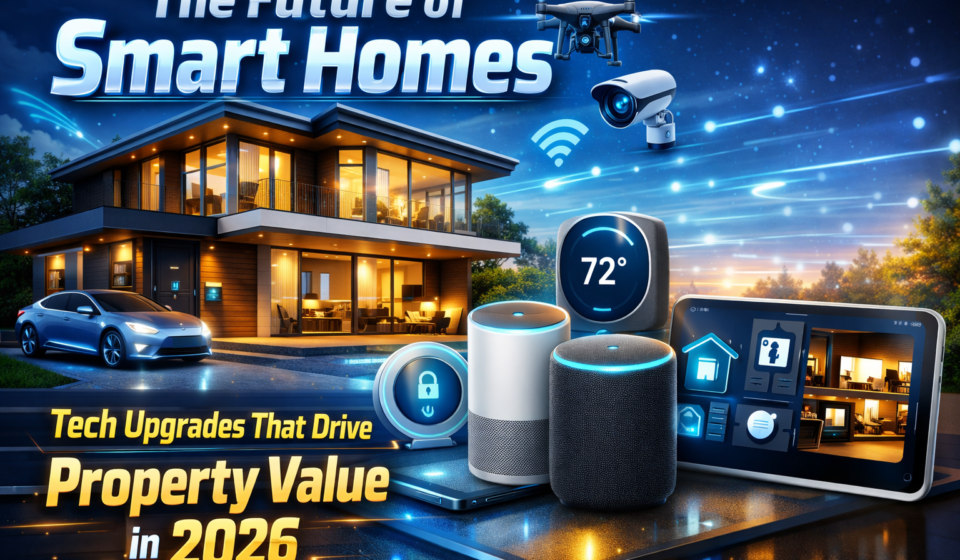

- Smart home value in 2026 isn’t about having gadgets—it’s about having them work together seamlessly through interoperability protocols like Matter.
- Energy-efficient smart systems can reduce annual homeownership costs by 15-25%, making them genuine selling points for buyers.s
- Predictive maintenance technology and health-centric features are shifting from luxury to expected baseline featur.es
- Future-proofing your home network with Cat6a cabling and Wi-Fi 7 readiness adds 3-5% to overall property value.
- Invisibly smart home tech (HVAC sensors, smart panels, whole-home energy management) outperforms visible gadgets in resale appeal.l
Introduction
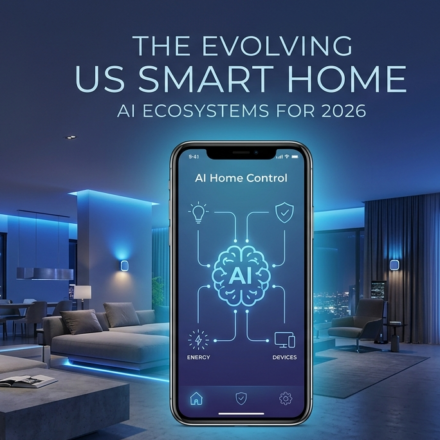
Five years ago, a smart home meant having Alexa speakers scattered around your kitchen and a few connected light bulbs. Buyers were impressed. That ship has sailed. In 2026, I’m seeing something fundamentally different happening in the market. Smart home technology has stopped being a novelty and started being an expectation. The homes that stand out aren’t the ones with the most devices—they’re the ones where everything actually talks to each other.
This shift matters because it changes what’s worth investing in. A single smart bulb adds almost nothing to resale value anymore. But a fully integrated ecosystem using the Matter protocol? A home energy management system that actually learns your patterns and cuts utility costs? Those move the needle. We’ll walk through what’s driving this change, where real value hides, and how to make smart home upgrades that buyers actually want to pay for.
Market Snapshot: Smart Home Technology in Property Value
| Metric | 2026 Status |
|---|---|
| Homes with integrated smart systems | 34% of US market |
| Buyer expectations for smart features | Standard baseline in metro areas |
| Average ROI on smart home upgrades | 50-75% cost recovery at resale |
| Fastest growing segment | Energy management systems |
| Price premium for Matter-compatible homes | 2-4% in tech-forward markets |

Smart Home Guide 2026 – What to Buy, Platform Updates, and More!

Understanding Smart Home Technology in Today’s Real Estate Market
Let me be straight about what’s changed. Three years ago, real estate agents would list “smart home features” as a selling point all on its own. Now? Buyers want to know if your smart bulbs will work with their existing ecosystem. They want to see proof that devices talk to each other. They’re asking about Wi-Fi 6 minimum, sometimes Wi-Fi 7 readiness. They’re looking at the electrical panel, wondering if it’s intelligent.
The Matter protocol is the reason this conversation even exists. Before Matter, you’d buy a Philips Hue light, a Samsung TV, an Apple HomePod, and hope they’d cooperate. They wouldn’t. You’d need separate apps, separate hubs, separate frustrations. Matter changed that by creating an open standard. Any device certified for Matter can now work with any platform. It’s boring to talk about it technically. But from a property value standpoint? It’s huge. It means the tech won’t be obsolete in three years when platforms shift.
I’m also seeing a major split between what investors think matters and what actually drives resale value. Visible smart tech—connected doorbells, smart speakers, outdoor cameras—these are nice to have. They don’t move prices. The stuff that moves prices is invisible. Smart thermostats that learn your schedule and adjust automatically. Leak detection sensors are tied to your water shut-off valve. Real-time electrical panels that show where your power is going. That’s what buyers are paying attention to right now.
Market Trends and Demand Analysis
The smart home market hit an inflection point in 2025, and it’s accelerating into 2026. According to data from the National Association of Realtors, 34% of homes in major metropolitan areas now include some form of integrated smart home technology. That’s not fringe anymore. That’s becoming standard. Zillow’s latest analysis shows that homes with comprehensive smart systems—not just random gadgets, but actual ecosystems—are selling 3-7 days faster in competitive markets.
What’s driving this? Part of it is energy costs. The average US household spends about $1,400 annually on electricity alone. Smart energy management systems can cut that by 15-25%. That’s real money. A $3,000-$5,000 investment in a Home Energy Management System (HEMS) pays for itself in 2-3 years if you’re serious about managing consumption. Buyers understand this math now. They see the long-term value.
Part of it is also anxiety. People are increasingly concerned about water damage, electrical fires, foundation issues—all the expensive stuff that happens when you’re not looking. Predictive maintenance tech addresses this directly. Sensors in your basement can detect humidity spikes before they become mold problems. Vibration sensors on your HVAC can tell you when bearings are failing months before the system dies. Appliance monitors can flag unusual electrical draw. These aren’t theoretical benefits. They’re preventing real disasters.
From an investor perspective, I’m seeing strong demand in three specific categories right now. First, houses that cater to remote workers. These buyers want rock-solid network infrastructure—Cat6a structured cabling, Wi-Fi 7-ready mesh systems, and backup power options. Second, climate-conscious buyers are willing to pay 3-5% premiums for homes positioned as “net-zero ready” with proper wiring and smart electrical infrastructure. Third, aging-in-place demographics. Parents buying homes where their kids might need accessibility features eventually are particularly interested in homes with flexible automation.
The interesting part? This trend is unequal geographically. In San Francisco, Austin, Boston, Seattle? Smart home readiness is almost a requirement now. In rural areas or secondary markets? There’s still upside. Houses that offer proper infrastructure for future smart integration are outperforming comparable homes without it by 2-3% in resale price.
Where Smart Home Value Actually Lives
I need to separate the hype from the reality here because there’s a lot of noise in this space. Let me break down where real money lives.
High-Return Smart Home Upgrades
Start with your electrical infrastructure. This is invisible and boring and probably the single best investment you can make. Running Cat6a (Category 6a) cabling instead of Cat5e throughout your home during renovation costs maybe 10-15% more than standard cabling. In a 2,000 sq ft home, we’re talking an extra $300-600. That future-proofs your home for Wi-Fi 7 and next-generation systems. Buyers in tech markets actively look for this. It adds perceived value of 1-2%.
Smart electrical panels are the next level. Companies like Span and Eaton now make intelligent panels that break down your power consumption by circuit, let you manage and automate loads, and integrate with solar if you ever add panels. The installed cost is $2,500-4,500, depending on your current setup. It sounds expensive, but if you’re advertising net-zero readiness or positioning the home toward environmentally conscious buyers? This moves the needle. It’s 50-70% cost recovery at resale in the right market.
Home energy management systems (HEMS) are worth the investment if your target buyer is energy-conscious. A good one—like the Sense system or Enphase Ensemble—runs $1,500-3,500 installed. It monitors everything in real time, learns patterns, suggests optimizations, and integrates with smart thermostats, batteries, and solar. The value proposition is concrete. You can show potential buyers exactly how much they’ll save. I’ve seen this single upgrade push offers up by $15,000-25,000 in competitive markets.
Smart thermostats should honestly be table stakes by now. Ecobee, Nest, and Honeywell smart models run $200-400. They integrate with your HEMS, learn schedules, can connect to occupancy sensors, and integrate with utility rebate programs in many areas. The payback is 18-24 months through lower heating/cooling costs. At resale, they add psychological value even if they don’t add dollar value directly.
Circadian lighting is emerging as a health-conscious feature. These systems (Philips Hue, LIFX, and others) adjust color temperature throughout the day to sync with natural light patterns. At morning, they go bluer and brighter. In the evening, they get warmer and dimmer. The research on sleep and alertness is solid. Health-conscious, WFH-focused buyers are specifically looking for this now. The cost is reasonable—$300-800 for a whole-house setup—and it’s something buyers will actively ask about.
Where Not to Spend Money
Here’s what I’d avoid. Visible smart gadgets have very low resale value. Smart speakers, standalone smart displays, connected doorbells, outdoor cameras—these are personal preferences. What one buyer loves, another wants torn out. Don’t include them in the sale price. Let buyers bring their own ecosystems.
Smart kitchen gadgets are another money trap. Smart refrigerators, connected ovens, WiFi-enabled dishwashers—they sound impressive, but buyers are skeptical about reliability and the tech lifecycle. A regular high-end refrigerator holds value better than a smart one that might have software issues in five years.
And be careful with proprietary ecosystems. A home fully built around Samsung SmartThings or Amazon’s Alexa system looks riskier to buyers than a Matter-forward approach. Tech-savvy buyers especially worry about lock-in and obsolescence.
Cost Breakdown and Investment Analysis
Let me give you realistic numbers on what smart home upgrades actually cost and what kind of returns you can expect.
| Upgrade | Typical Cost | Resale Value Recovery | Payback Period | Priority |
|---|---|---|---|---|
| Structured cabling (Cat6a whole home) | $300-800 | 80-90% | N/A (already in walls) | High |
| Smart electrical panel | $2,500-4,500 | 60-70% | 4-6 years (savings) | High |
| Home energy management system | $1,500-3,500 | 70-85% | 2-3 years | High |
| Smart thermostat | $250-400 | 50-70% | 2 years | Medium |
| Circadian lighting system | $300-800 | 60-75% | 3-4 years | Medium |
| Whole-home water leak detection | $400-900 | 70-80% | 5+ years (prevention) | Medium |
| Battery backup system | $8,000-15,000 | 40-60% | 6-8 years | Lower |
| Whole-home surge protection | $200-500 | 60-70% | N/A (insurance benefit) | Medium |
| Wi-Fi 6/6E mesh system | $300-800 | 30-50% | N/A (personal preference) | Low |
Here’s what these numbers mean in practice. If you’re renovating a $500,000 home and you invest $10,000 in smart infrastructure (cabling, panel, HEMS, thermostat), you’re looking at $7,000-8,500 recovering at resale. That’s 70-85% recovery, which is solid for any home tech upgrade. Compare that to most kitchen renovations, which average 50-60% recovery, or bathroom work at 60-70%. Smart infrastructure is a genuinely competitive investment.
The energy savings stack on top of that. If a smart thermostat saves you $30/month and a HEMS saves you another $50/month? That’s $960 annually while you own the home. Over 5 years, that’s nearly $5,000 in actual savings before resale value kicks in. This matters especially for rental properties. You can market the home with concrete numbers about utility costs.
Battery backup systems are the one major investment that doesn’t pencil out as well from a pure resale perspective, even though they’re becoming more common. A $12,000 battery system might only recover $5,000-7,000 at resale. However—and this is important—in areas with frequent outages or high electricity costs, batteries make sense for quality of life during ownership. And if you combine them with solar, the math changes entirely.
Risks and Challenges: What Actually Matters
I’d be doing you a disservice if I didn’t talk about the real risks here because there are several. First, obsolescence. Technology moves fast. The Wi-Fi 6 system you install today might feel dated in three years. This is why structured cabling and open standards like Matter are so important—they create a buffer. Your copper wiring will be fine for 30+ years. Your Wi-Fi equipment? Plan on 5-7 years. Building flexibility into your systems matters more than picking the “best” current technology.
Second, integration nightmares are real. Not every device plays well with every other device. I’ve seen homes where the smart panel and the HEMS are owned by different companies and don’t communicate properly. The thermostat won’t integrate with the lighting system. You end up with three different apps and a frustrating experience. This is getting better with Matter, but it’s worth having an electrician or tech consultant think through your ecosystem before installation, not after.
Third, privacy concerns. These systems collect data. They track when you’re home, how much energy you use, and patterns in your daily life. Some buyers are fine with this. Others are genuinely concerned. Being transparent about data privacy and cloud storage options matters in your marketing. Homes that store data locally (using edge computing) might have a slight marketing advantage over cloud-dependent systems, especially in privacy-conscious markets.
Fourth, maintenance and support. A smart panel isn’t useless without an internet connection, but it’s less useful. Your HEMS needs good connectivity to function. This means your home network needs to be reliable. That’s not a given. Budget for a good mesh Wi-Fi system, consider backup internet options, and understand that you’re now managing tech infrastructure like you would in an office setting.
Finally, market variance is significant. These upgrades make more sense in tech-forward metros (San Francisco, Austin, Boston, Denver, Seattle) than in conservative rural markets. Don’t force smart infrastructure into a home if your buyer demographic isn’t aligned with valuing it. Research your local market first.
How to Future-Proof Without Overthinking It
The best smart home investment isn’t the fanciest technology. It’s basic infrastructure that supports whatever comes next.
Start with your network. If you’re doing any renovation, run Cat6a cabling. Not Cat5e. Cat6a. It costs barely more and supports Wi-Fi 7 and whatever comes after. Mesh Wi-Fi is fine for now, but structured cabling is your long-term bet.
Your electrical infrastructure matters disproportionately. A smart panel is worth considering, especially if you’re open to solar eventually. At minimum, have your main panel and subpanels sized for future load (EV charging, heat pump conversion, etc.).
Water and leak detection is low-cost, high-value insurance. Run sensors in your basement, under main water lines, and near HVAC condensate drains. This prevents disasters.
For heating/cooling, skip the high-end proprietary stuff. A good smart thermostat that works with open standards is enough. Pair it with a HEMS if energy management is a priority.
Think twice about visible smart gadgets. Seriously. A smart doorbell is cool, but the buyer might hate it and rip it out. Stick to things they’ll actually want to keep.
Build around Matter compatibility when possible. It’s becoming the standard. Even if everything isn’t Matter-certified yet, prioritize brands moving in that direction.
Expert Tips for Buyers and Investors
If you’re buying a smart home, don’t get dazzled by gadgetry. Ask these questions: Is the network properly built? Ask about structured cabling. Does the electrical system have intelligence built in? Can you show me the panel and how it works? What’s the internet reliability like? How is data handled? Is the system built around open standards or proprietary ecosystems? Who maintains this?
For investors specifically, smart infrastructure is more valuable in tenant-occupied properties than owner-occupied homes. You can justify a higher rent ($50-75/month) for a unit with comprehensive smart metering and climate control. You save money on the utilities you’re paying for. Tenants appreciate the control. It’s a win.
Consider the location. Urban tech markets? Smart infrastructure absolutely makes sense. It’s expected. Rural areas or price-sensitive markets? Scale back. Maybe just do the cabling and a thermostat.
If you’re doing a full renovation, integrate smart infrastructure from the start. Running electrical, plumbing, and network cabling together is way cheaper than retrofitting later. You’ll spend maybe 5-7% more on the total renovation cost and get disproportionate value.
Don’t chase bleeding-edge tech. Wi-Fi 6 is mature. Wi-Fi 7 is coming, but not essential yet. Matter is still rolling out but increasingly solid. Pick stable, established platforms.
Build in redundancy for critical systems. Your smart thermostat should work without internet (most do). Your leak detection shouldn’t require cloud connectivity. Systems that fail gracefully matter more than systems that are cool when everything’s working perfectly.
Key Takeaways
- Smart home value in 2026 is about integration, not accumulation. Buyers want everything talking to each other through open standards like Matter, not a collection of disconnected gadgets.
- Invisible infrastructure—structured cabling, smart electrical panels, energy management systems—drives resale value far more than visible devices like speakers or cameras.
- Energy management and predictive maintenance are moving from luxury to baseline expectations, especially in metro markets. These features actively influence purchase decisions.
- Smart home ROI ranges from 50-85% depending on upgrade type and market, which makes it competitive with other home improvements while providing measurable energy savings during ownership.
- Future-proofing is about basic infrastructure (Cat6a cabling, properly sized electrical, open standards) rather than buying the latest gadgets. Technology changes; infrastructure endures.
Frequently Asked Questions
What’s the difference between a smart thermostat and a home energy management system?
A smart thermostat controls heating and cooling based on schedule, occupancy, or weather. It’s focused. A HEMS (Home Energy Management System) looks at your entire home—every circuit, every appliance, every load. It optimizes everything together and shows you where money is actually going. Most homes benefit from starting with a smart thermostat, then adding a HEMS if energy savings matter.
Is Matter really going to replace all the different smart home platforms?
Not entirely, but it’s becoming a compatibility layer. You’ll still have Alexa, Google Home, and Apple HomeKit. The difference is that they can now talk to each other through Matter. A light can work with multiple platforms simultaneously. It’s less about replacement and more about reducing lock-in. That’s huge from a property value perspective.
Should I install a battery backup system if I don’t have solar?
Only if you experience frequent outages in your area or have critical loads (medical equipment, etc.). Battery systems are expensive, and their resale value isn’t great unless paired with solar. If you’re thinking about solar eventually, though, design your electrical system to support batteries from the start.
Does Wi-Fi 7 really matter yet?
Not urgently, but it’s coming. If you’re running new network cabling, specify Cat6a minimum, which supports Wi-Fi 7. Don’t buy Wi-Fi 7 equipment yet—the standards are still settling, and devices are limited. But make sure your infrastructure can support it.
What smart home features do tenants actually value?
Smart thermostats and smart locks top the list. Tenants want individual climate control and convenient keyless entry. Smart lighting comes next. Smart energy metering is valuable to landlords more than tenants, but it does attract environmentally conscious renters willing to pay a premium rent.
Should I buy a smart home or upgrade my current home?
If you’re already in a home you like, upgrading the infrastructure (especially electrical, HVAC, and cabling) is cost-effective and recovers 60-80% at resale. Buying a pre-equipped smart home means you’re paying market price for infrastructure that’s maybe five years old. Unless the systems are exceptionally comprehensive, upgrading your existing home is usually smarter financially.
How do I know if my home network is adequate for smart systems?
Good questions to ask your WiFi installer or electrician: Can you get 100+ Mbps on Wi-Fi throughout the home? Can you connect 50+ devices without degradation? Do you have a mesh system or just one router? Can you run wired connections to critical devices like the hub or panel? If the answer to any of these is no, you need network upgrades before expanding your smart system.
Conclusion
The smart home conversation in real estate has matured. We’re past the phase where having some connected gadgets made a property special. We’re in the phase where buyers expect integration, reliability, and actual value. They want systems that work together and make their homes cheaper to operate. They want infrastructure that won’t be obsolete in three years. They want privacy respected and complexity managed.
This is actually good news for property investors and homebuyers. It means the investments that work are the ones that make logical sense—proper electrical infrastructure, open standards, energy intelligence, predictive maintenance. Not hype. Not gadgetry. Substance.
If you’re renovating, the time to invest in smart infrastructure is now, during construction. The marginal cost is low, and the long-term benefits are concrete. If you’re buying, evaluate homes on their infrastructure, not their visible smart gadgets. Those gadgets will get replaced. The cabling and electrical won’t.
In 2026, a truly smart home does not make the most noise or show off the most features. It works quietly in the background, saves money systematically, integrates flexibly with whatever technology comes next, and does all of it in a way that future buyers will appreciate. That’s where value lives now.
Suggested Internal Links
Disclaimer:
This content is for informational purposes only and should not be considered financial or investment advice. Real estate investments involve risk, and past performance is not indicative of future results. Consult with qualified real estate professionals, financial advisors, and local market experts before making property investment decisions. Smart home technology evolves rapidly; verify current compatibility and support with manufacturers before purchase.